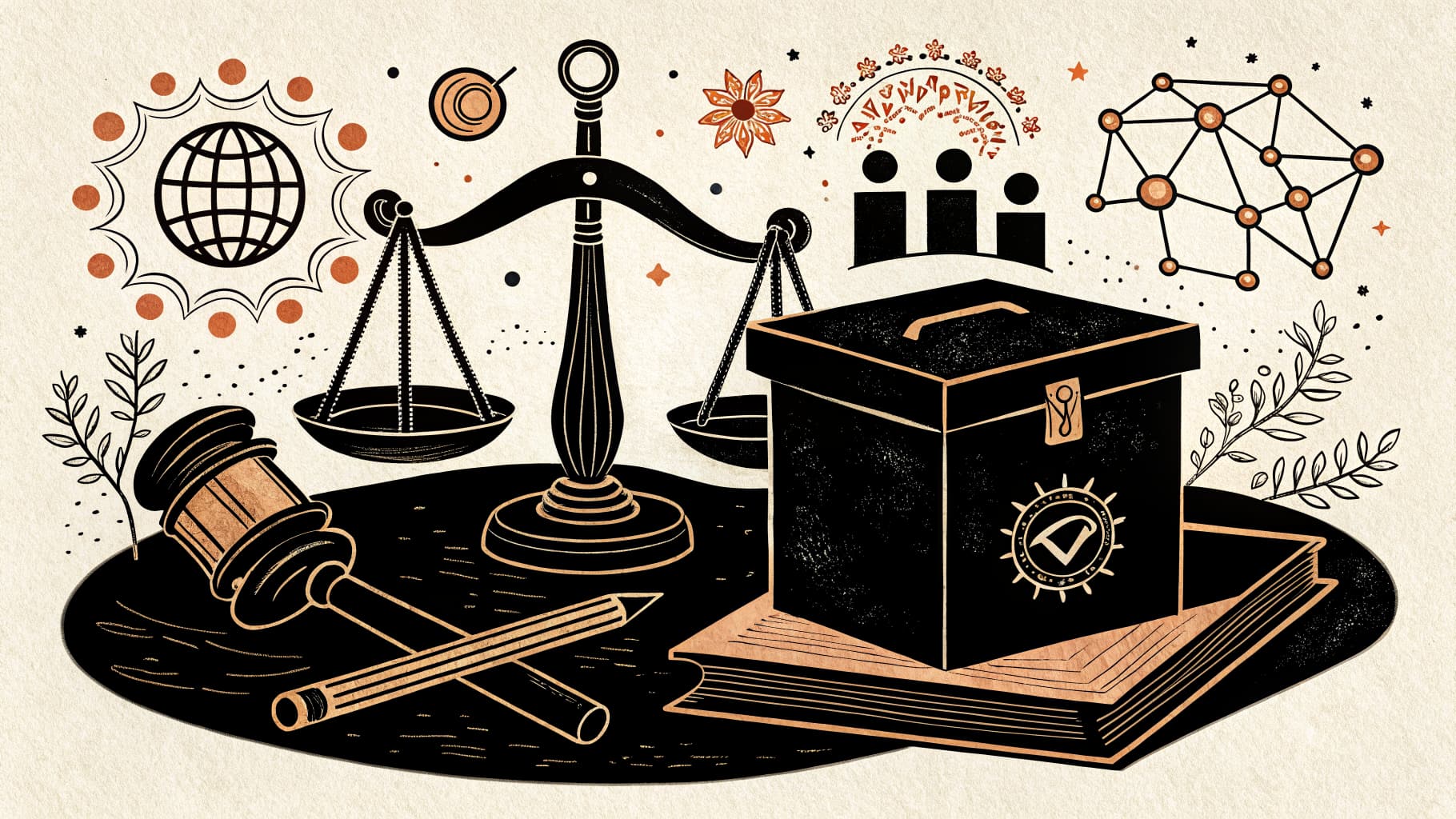
Advocacy and Social Change
Students will investigate how individuals and groups advocate for social change and influence public policy.
TL;DR:Active learning works because students need to experience the messiness of real-world advocacy to grasp how change happens. When they role-play petitions, design campaigns, or build timelines, they move from abstract ideas to concrete understanding, making the content stick.
About This Topic
In Year 7 Civics and Citizenship, Advocacy and Social Change introduces students to how individuals and groups drive improvements in society and shape public policy. They examine strategies such as petitions, protests, social media campaigns, and lobbying, using Australian cases like the 1980s Franklin River blockade or the 2017 marriage equality postal survey. This aligns with AC9C7S04 by developing skills to analyze civic participation and its impact on laws and institutions.
Students evaluate campaign effectiveness through criteria like community engagement, media reach, and policy results. They also construct personal advocacy plans for issues such as environmental protection or Indigenous recognition, connecting personal values to democratic processes. These activities build critical thinking and ethical reasoning essential for active citizenship.
Active learning suits this topic perfectly. When students role-play strategies, debate outcomes, or pitch their plans to peers acting as policymakers, they experience the challenges and power of advocacy firsthand. This hands-on approach turns passive analysis into personal investment, deepening understanding and motivating real-world civic engagement.
Key Questions
- Analyze different strategies used by advocates to promote social change.
- Evaluate the effectiveness of various advocacy campaigns in achieving their goals.
- Construct an advocacy plan for a social issue you care about.
Learning Objectives
- Analyze the methods used by historical and contemporary advocacy groups in Australia to influence public policy.
- Evaluate the success of specific advocacy campaigns by identifying key stakeholders and measurable outcomes.
- Design a persuasive advocacy plan for a chosen social issue, outlining target audiences, strategies, and desired results.
- Compare and contrast the effectiveness of different advocacy tactics, such as petitions versus direct action, in achieving social change.
Before You Start
Why: Students need a foundational understanding of Australia's democratic system, including the roles of government and citizens, to comprehend how advocacy influences policy.
Why: Understanding the concept of rights and responsibilities provides context for why individuals and groups feel compelled to advocate for specific social changes or protections.
Key Vocabulary
| Advocacy | The act of publicly supporting or recommending a particular cause or policy. It involves speaking out and taking action to influence decisions. |
| Social Change | Significant alterations in social structures, cultural norms, and values over time. Advocacy often aims to drive or resist such changes. |
| Public Policy | A course of action or inaction adopted and pursued by government. Advocacy groups often try to influence the creation or amendment of public policy. |
| Lobbying | The act of attempting to influence decisions made by officials in a government, most often legislators or members of regulatory agencies. This is a common advocacy strategy. |
| Grassroots Movement | A movement driven by ordinary people at the local level, rather than by established political figures or organizations. These movements often use advocacy to achieve their aims. |
Watch Out for These Misconceptions
Common MisconceptionAdvocacy only succeeds through large protests.
What to Teach Instead
Many changes result from petitions, lobbying, or online campaigns, as seen in the marriage equality survey. Role-playing diverse strategies helps students compare methods and see quiet persistence often builds lasting policy shifts.
Common MisconceptionIndividuals cannot influence public policy.
What to Teach Instead
Single voices, amplified by groups, spark change, like student-led climate strikes. Collaborative planning activities show students how personal ideas gain power through alliances and targeted actions.
Common MisconceptionSocial change happens quickly if the cause is just.
What to Teach Instead
Campaigns like Franklin Dam took years of sustained effort. Timeline-building tasks reveal persistence and adaptation, helping students appreciate realistic civic timelines through group discussions.
Active Learning Ideas
See all activities→Jigsaw
Advocacy Strategies
Divide class into expert groups, each researching one strategy like petitions or protests using provided Australian case studies. Experts then regroup to teach their strategy to mixed teams, who compile a class comparison chart. Conclude with a whole-class share-out of key insights.
Project-Based Learning
Campaign Debate Pairs: Effectiveness Analysis
Assign pairs two campaigns, such as the Voice to Parliament or school uniform changes. Pairs prepare arguments on strengths and weaknesses using success criteria like public support and outcomes. Hold structured debates where pairs switch roles as proposers and critics.
Project-Based Learning
Pitch Workshop: Personal Advocacy Plans
In small groups, students select a social issue and outline a step-by-step plan with chosen strategies. Groups refine plans through peer feedback, then pitch to the class as if addressing parliament. Vote on most feasible plans with rationale.
Real-World Connections
- Students can research the work of the Australian Council of Social Service (ACOSS), a national advocacy organisation that works to fight poverty and inequality by influencing government policy and public opinion.
- Investigating the 'Change.org' platform reveals how everyday citizens can initiate and support advocacy campaigns for a wide range of social and environmental issues, from local community concerns to national policy debates.
- Examining the historical advocacy efforts of groups like the Stolen Generations or the Aboriginal Tent Embassy demonstrates how persistent public pressure and strategic campaigning can lead to significant shifts in government recognition and policy.
Assessment Ideas
Pose the question: 'Which advocacy strategy, a petition or a public protest, do you believe is generally more effective in achieving social change in Australia, and why?' Encourage students to support their arguments with examples discussed in class.
Provide students with a brief case study of a past Australian advocacy campaign (e.g., the campaign for marriage equality). Ask them to identify: 1) The main goal of the campaign. 2) Two specific strategies used by advocates. 3) One piece of evidence suggesting the campaign's effectiveness or lack thereof.
Students present a summary of their advocacy plan to a small group. Peers use a simple checklist to evaluate: Is the social issue clearly defined? Are the proposed strategies realistic for Year 7 students? Is the desired outcome specific and measurable? Peers provide one constructive suggestion for improvement.
Frequently Asked Questions
What Australian examples work for teaching advocacy in Year 7 Civics?
How to evaluate advocacy campaign effectiveness with students?
How can students construct advocacy plans in Civics lessons?
How does active learning benefit teaching advocacy and social change?
More in Rights, Responsibilities, and Identity
Defining Australian Citizenship
Students will investigate the legal and social definitions of being an Australian citizen.
8 methodologies
Understanding Human Rights
Students will be introduced to the concept of human rights and why they are important for everyone.
8 methodologies
Individual Rights vs. Collective Responsibilities
Students will consider the tension between individual freedoms and the needs of the community.
8 methodologies
The Ethics of Participation in Democracy
Students will consider the moral obligations of citizens to participate in their community and democracy.
8 methodologies
Multiculturalism and Australian Identity
Students will explore how multiculturalism shapes Australian society and national identity.
8 methodologies
Indigenous Rights and Reconciliation
Students will examine the historical and ongoing struggle for Indigenous rights and the path to reconciliation.
8 methodologies