The materials you hand to students are starting to look the way you would make them yourself: with the right picture or diagram in the right place. And the missions behind them now show up on your screen sooner.
Pictures and diagrams, right in the printable materials
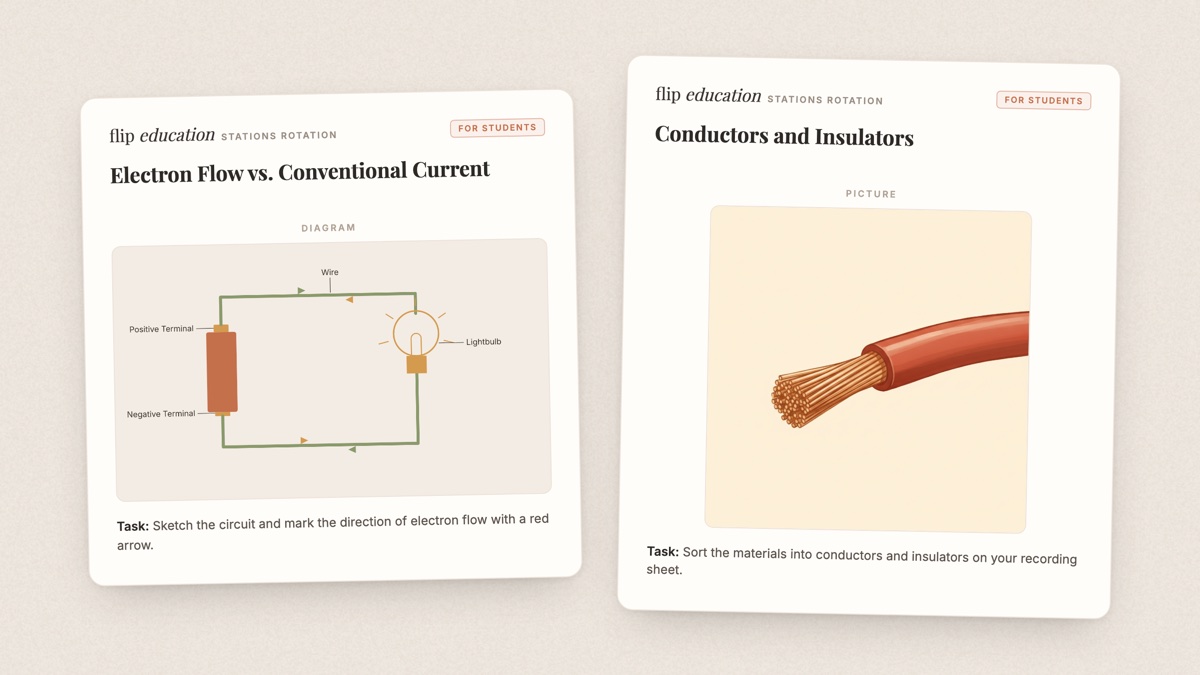
Student materials, evidence packets, station cards, escape-room sources, can now include images matched to your topic, across grade levels. Where a lesson calls for something structured, a circuit, a food chain, a chart, materials can carry a clean diagram with every label exactly where it belongs, in your language. The same visuals follow the material wherever you take it: print the PDF, or export to Word or Google Docs.
No more blank boxes standing in for "find a picture of this later". Where a visual genuinely helps the task, the material now arrives with it.
Your mission shows up sooner
A ready-to-read version of your mission now appears while Flip Education keeps polishing the materials in the background, often about a minute sooner than before. You can start reading the lesson flow while the finishing touches land. Generation is also steadier on long, complex missions. And we are not done yet.
Smaller things you'll notice
- Every newly generated handout says who it's for. A small label in the top corner reads "For students", "For the teacher", or "Assessment", in your language, so an answer key never hides in a student stack again.
- Missions now budget real classroom time. Forming groups, handing out materials, settling down: lessons reserve time for the transitions, so the plan fits the period instead of running out two-thirds of the way through.
Also worth knowing
Adriana, our co-founder, wrote for eSchool News on why the methodology behind an AI tool matters more than the content it produces. Read it on eSchool News.
Good materials are never quite finished. They keep getting closer, and what moves them forward is a teacher noticing when something is off: a diagram that misreads the lesson, an image that does not belong, a handout that did not fit the room. When you spot one, tell Flo or send us a note. The next round usually starts there.