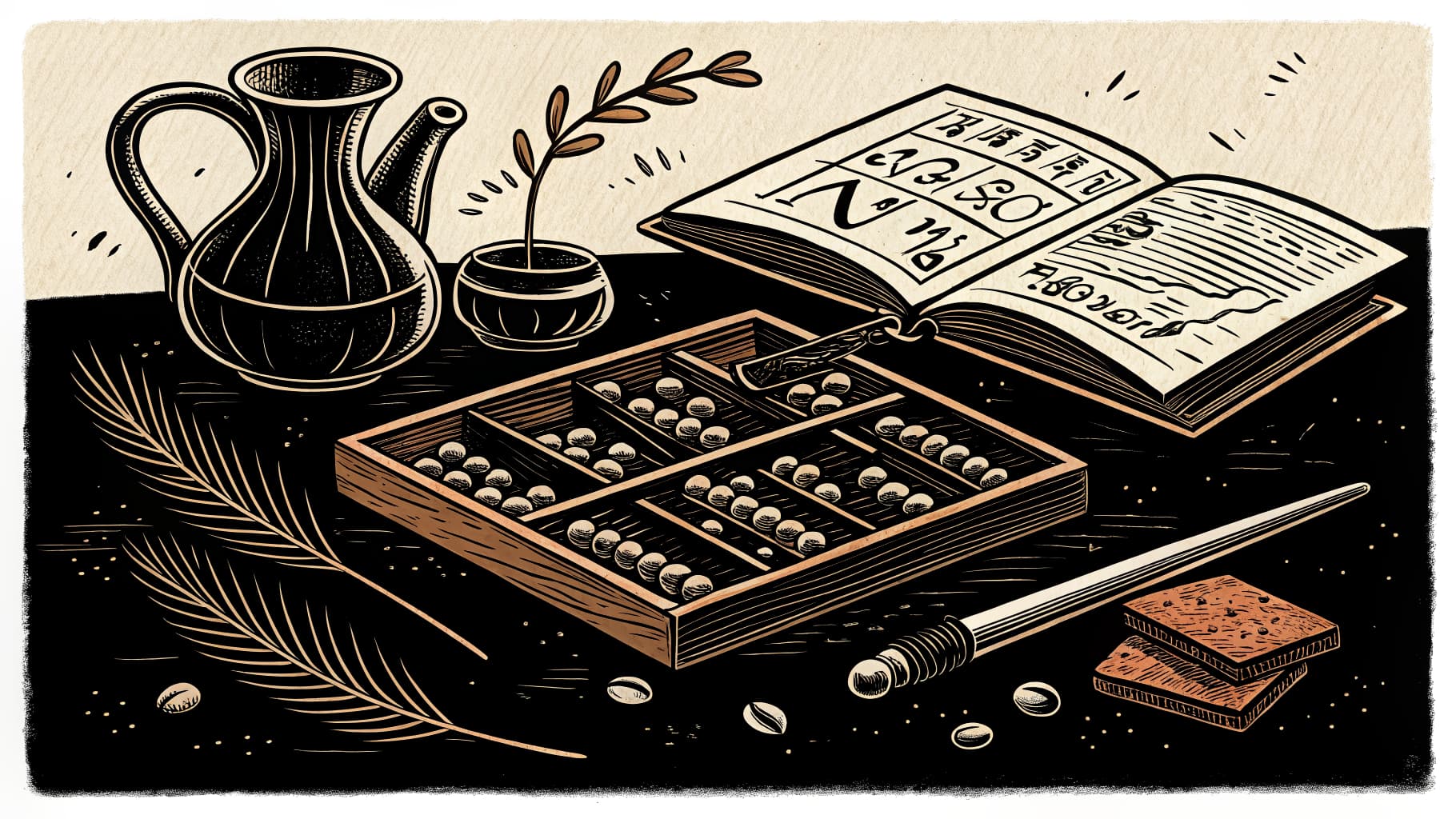
Real (small) tools for purposeful tasks: pouring, buttoning, sweeping, slicing
Practical Life Work
Children use real (small-scale) tools to accomplish purposeful tasks: pouring water from a small pitcher, buttoning a coat, sweeping crumbs, slicing a banana with a small plastic knife, polishing, washing dishes, transferring beans with a spoon. Teacher demonstrates slowly, only once; child then does. Hands-off. Materials sequenced left-to-right. Real consequences (water spills if you pour wrong; child observes and self-corrects). The Montessori entry-point routine before any academic work. Strict safety: no sharp blades, no heat, no breakable glass at this age.
What is Practical Life Work?
Practical Life is the cornerstone of the Montessori classroom for children aged three to six. It consists of simple, daily activities that adults often take for granted, such as pouring water, sweeping, or buttoning a coat. However, in the eyes of a young child, these tasks are the keys to the world. Maria Montessori observed that children have an innate drive to participate in the real work of their community. By providing them with the tools and the time to do so, we support their natural development (Montessori, 1967).
The curriculum is divided into four main areas: care of self, care of the environment, grace and courtesy, and control of movement. Care of self includes tasks like dressing, grooming, and preparing food. Care of the environment involves activities like watering plants, dusting shelves, and washing dishes. Grace and courtesy lessons teach social skills, such as how to interrupt politely or how to carry a chair quietly. Finally, control of movement activities, like walking on a line, help children refine their physical coordination (Lillard, 2017).
One of the most important aspects of Practical Life is the use of real materials. In a Montessori room, you will not find plastic play kitchens. Instead, you will see small glass pitchers, metal polish, and real wooden brooms. These materials are chosen because they are beautiful and breakable. When a child uses a glass pitcher, they learn to move with care. If they drop it, the glass breaks, providing an immediate and natural lesson in physics and responsibility. This 'control of error' is built into the materials themselves, allowing the child to learn without constant adult correction (Montessori, 1967).
Beyond physical skills, Practical Life is essential for cognitive development. Lillard's (2017) review of the research shows that these activities are highly effective at building executive function. When a child prepares to wash a table, they must remember a long sequence of steps: get the apron, fill the bucket, find the sponge, apply the soap, scrub the surface, rinse, dry, and put everything away. This requires working memory, inhibitory control, and cognitive flexibility. By completing the full cycle of activity, the child strengthens their ability to focus and see a project through to the end.
For the teacher, the methodology requires a shift in perspective. The teacher, in Montessori terminology, the directress or guide, sets the stage. The primary teaching tool is the 'presentation.' During a presentation, the teacher shows the child how to do a task using very slow, precise movements. The teacher speaks very little, as talking can distract the child from the visual demonstration. Once the lesson is over, the teacher steps away. This gives the child the space to explore the material at their own pace (Montessori, 1967).
Practical Life also fosters a deep sense of community and self-worth. When a four-year-old realizes they can pour their own juice or clean up a spill without help, their confidence grows. They no longer see themselves as helpless, but as contributing members of their classroom. This sense of competence is the foundation of a healthy personality (Lillard, 2017). By mastering the small tasks of daily life, children prepare themselves for the more complex academic work of math and literacy that follows.
How to Run Practical Life Work: Step-by-Step
Prepare the environment
3 min
Arrange child-sized, real materials, such as a glass pitcher and pouring bowl, or a dressing frame with buttons, on a low shelf in a logical order from left to right.
Invite the child
3 min
Walk to the child and ask if they would like to see a new activity, ensuring they are ready to focus.
Demonstrate the sequence
3 min
Show how to carry the tray to a table and perform the task using slow, deliberate movements and minimal talking.
Observe the work
4 min
Step back and watch the child attempt the task, resisting the urge to correct minor mistakes unless necessary.
Facilitate repetition
4 min
Allow the child to repeat the activity as many times as they wish without interruption.
Restore the materials
3 min
Show the child how to clean the tray, dry any spills, and return the materials to the exact spot on the shelf.
BEFORE YOU TEACH THIS
Read the Teacher's Guide first.
Flip Education's Teacher's Guide walks you through how to facilitate any active learning lesson: mindset, pre-class checklist, phase-by-phase facilitation, and a Quick Reference Card you can print and bring to class.
Read the Teacher's Guide →When to Use Practical Life Work in the Classroom
- Building fine motor coordination and hand strength
- Developing concentration and intentional sequencing
- Children who need real, purposeful work (not "play")
- Topics tied to food, care of self, or care of environment
Research Evidence for Practical Life Work
Lillard, A. S., Else-Quest, N. (2006, Science, 313(5795), 1893-1894)
Quasi-experimental study using lottery-based admission to control for selection. Compared 5- and 12-year-olds from a Milwaukee Montessori school with controls from other schools. Montessori children scored higher on academic and social measures including executive function and theory of mind. Practical-life activities are part of the bundled Montessori program being measured.
Lillard, A. S., Heise, M. J., Richey, E. M., Tong, X., Hart, A., Bray, P. (2017, Frontiers in Psychology, 8, 1783)
Longitudinal study with lottery-based admission to two public Montessori magnet schools. 141 children tested four times across three years (ages 3 to 6). Montessori children outperformed controls on academic achievement, social understanding, mastery orientation, and executive function. Practical-life is one of the four core Montessori curricular strands.
Demangeon, A., Claudel-Valentin, S., Aubry, A., Tazouti, Y. (2023, Contemporary Educational Psychology, 73, 102182)
Meta-analysis of 33 Montessori studies (k=109 effect sizes) across academic achievement, executive function, creativity, social skills, and sensorimotor outcomes. Found small-to-medium positive effects, with the largest gains in executive function and academic outcomes.
Principles and Practice of Practical Life Work
Montessori, M. (1967, Holt, Rinehart and Winston)
Argues that real-life tasks (pouring, sweeping, buttoning, washing) are the foundation of early-childhood learning because they give the child agency over the environment and develop concentration through the cycle of activity.
Lillard, A. S. (2017, Oxford University Press, 3rd Edition)
Reviews evidence that practical-life activities support executive-function development, fine-motor coordination, and a sense of competence in the 3 to 6 age band.
Common Practical Life Work Mistakes and How to Avoid Them
Interrupting the child's flow of work
Teachers often feel the need to praise or correct a child mid-task, which breaks their concentration. To recover, practice 'sitting on your hands' and only offer help if the child looks for it or stops working.
Using toys instead of real tools
Plastic toy hammers or fake sinks do not provide the sensory feedback children need. Replace plastic toy hammers with a real child-sized tack hammer, replace fake sinks with a real basin and pitcher, and replace toy brooms with a child-sized natural-bristle broom.
Talking too much during the lesson
Excessive verbal instructions distract the child from watching the teacher's hands. Focus on the physical movements during the next demonstration and use only key words like 'pour' or 'wipe'.
Focusing on the result over process
If a teacher gets frustrated that the floor is still dusty after sweeping, they miss the developmental point. Remind yourself that the child is 'building the self' through the movement, not cleaning the room.
Incomplete cycles of activity
Leaving a mess behind prevents the next child from using the material. Ensure the 'restoration' step is treated with as much importance as the activity itself by modeling it every time.
How Flip Education Helps
Step-by-Step Picture Sequence Cards
Flip Education generates printable cards showing the order of operations for tasks like hand washing or table scrubbing. These allow non-reading children to self-correct and follow the sequence independently.
Classroom Observation Grids
The platform provides structured digital grids for teachers to track which Practical Life skills a child has mastered. Grids include columns for skill name (e.g., pouring, buttoning), date of first presentation, date of independent mastery, and teacher notes.
Grace and Courtesy Role-Play Prompts
Flip Education creates simple visual prompts for teachers to use during circle time to model social skills. These prompts help children visualize how to wait for a turn or greet a visitor.
Daily Routine Visual Strips
Teachers can generate custom visual schedules that include Practical Life blocks. These strips help children understand the flow of the day and when they are responsible for environmental care.
Tools and Materials Checklist for Practical Life Work
- Child-sized glass pitchers and creamers
- Small wooden trays for organizing activities
- Natural fiber cloths and sponges
- Small brooms and metal dustpans
- Dressing frames with real buttons, zips, and snaps
- Watering cans with narrow spouts
- Aprons to protect clothing during water work
Frequently Asked Questions About Practical Life Work
Why use real glass instead of plastic?
Real materials provide natural consequences and teach careful handling. If a glass breaks, the child learns that objects are fragile and requires a specific cleanup response, which plastic cannot teach.
How long should a child stay with one activity?
Observed work cycles in Montessori classrooms often range from 20 to 40 minutes, though this varies widely by child and task. The goal is not a fixed duration but internal satisfaction. This is a practitioner observation, not a sourced claim.
Is Practical Life just doing chores?
While the tasks look like chores, the purpose is the development of the child, not the cleanliness of the room. The process of sweeping is more important than the actual dust collected.
What is the teacher's role during work time?
The teacher is an observer who only intervenes if a child is being unsafe or disrespectful to the materials. Otherwise, the teacher remains quiet to protect the child's developing concentration.
Can these activities be done at home?
Yes, Practical Life is easily extended to the home by allowing children to help with real cooking, cleaning, and self-care. Consistency between school and home helps the child feel more capable.
Classroom Resources for Practical Life Work
Free printable resources designed for Practical Life Work. Download, print, and use in your classroom.
Grace and Courtesy: Greeting a Friend
A visual guide for teachers to model how to say hello to a peer in the morning.
Download PDFMy Work Today Picture Prompt
A verbal reflection tool for teachers to use with children after they finish a Practical Life task.
Download PDFPractical Life Language Prompts
A list of simple phrases for teachers to use during demonstrations to name objects and actions.
Download PDFClassroom Helpers Visual Roles
Picture-based cards that designate specific environmental care tasks for the week.
Download PDFRelated
Methodologies Similar to Practical Life Work
Ready to try this?
- Read the Teacher's Guide →
- Generate a mission with Practical Life Work →
- Print the toolkit after generating
Generate a Mission with Practical Life Work
A complete lesson plan, aligned to your curriculum.