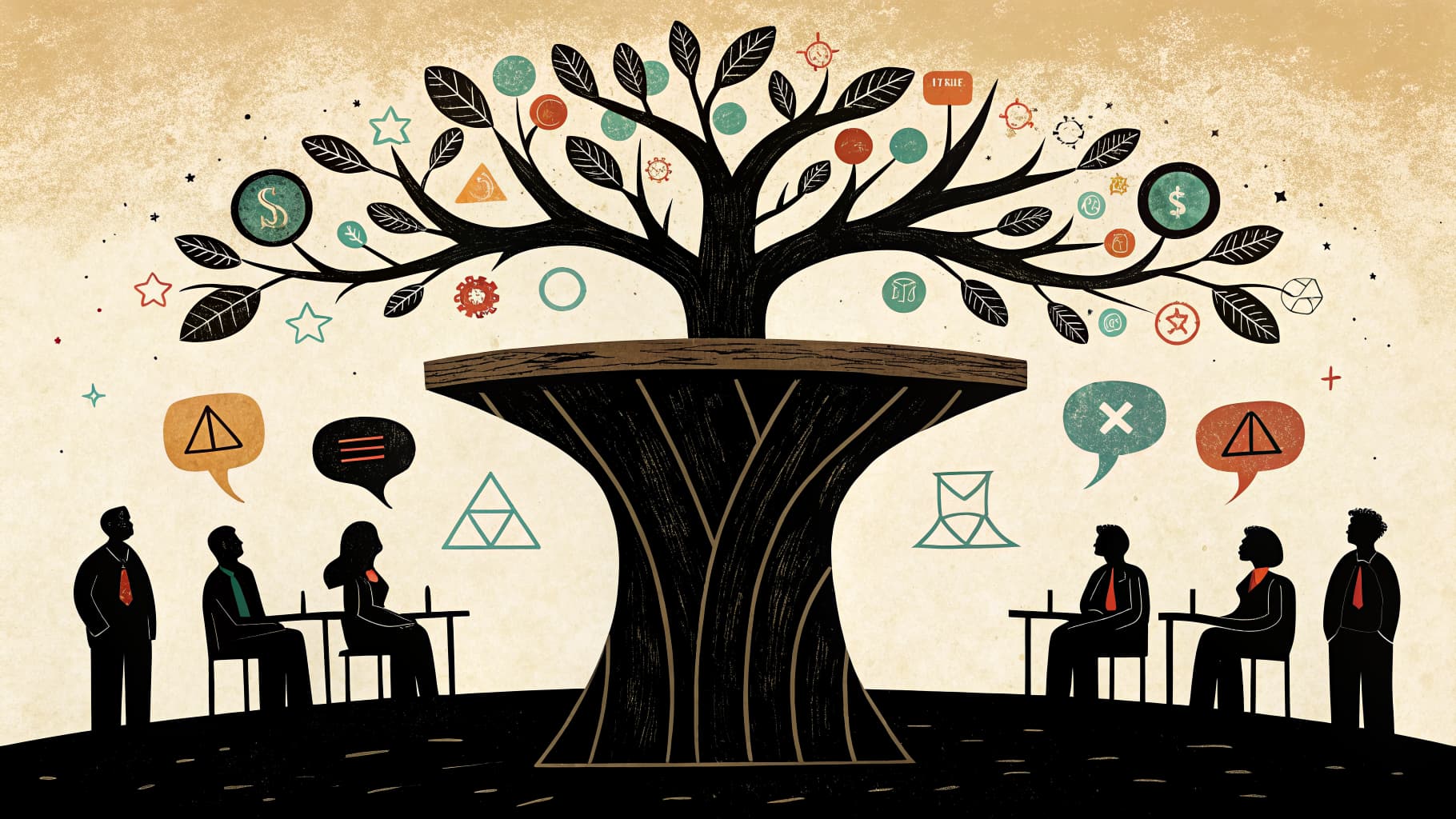
Picture this: instead of lecturing about the causes of World War I, you divide your 8th graders into nations. Each group receives a unique set of alliances, resources, and a hard deadline to prevent global conflict. Within 20 minutes, ultimatums are flying, backroom deals are happening, and students are feeling the structural pressures that pushed Europe toward catastrophe. That is simulation at work.
Simulation is one of the oldest pedagogical methods in existence. Military strategists used scenario-based training centuries before anyone coined the term "active learning." Business schools adopted decision-making simulations in the early 20th century. In K-12 classrooms, simulation became widespread during the social studies reform movements of the 1960s and 1970s, when educators argued that understanding history required more than memorizing dates: it required inhabiting the decisions of historical actors.
The research case has only strengthened since then. A 2020 meta-analysis by Olga Chernikova and Nikol Heitzmann at the Technical University of Munich, published in the Review of Educational Research, found that simulation-based learning is highly effective for building complex skills, particularly when teachers provide scaffolding and structured support. A 2017 systematic review by Vlachopoulos and Makri in the International Journal of Educational Technology in Higher Education confirmed that simulations significantly improve learning outcomes when aligned with clear objectives and followed by structured debriefs.
What Is Simulation?
A classroom simulation is a structured activity that places students inside a model of a real-world system (historical, scientific, economic, ecological, or social) and asks them to make decisions as participants within it.
The pedagogical logic is direct. A student who reads about the difficulty of international negotiation has second-hand knowledge. A student who has spent 45 minutes representing a small nation with limited leverage, trying to protect their interests against larger powers, has first-hand experience of the structural forces that make negotiation hard. That experiential understanding is qualitatively different from factual knowledge, and it tends to stick.
What distinguishes effective simulations from elaborate role-play is what game designers call "meaningful choices. If students can always identify the obviously correct decision, the one that's best regardless of context, the activity is a puzzle, not a simulation. Effective simulations require genuine tradeoffs: protecting one value means sacrificing another, and the best choice depends on the specific constraints of each student's role. That tension is where the learning happens.
How It Works
Step 1: Define Learning Objectives First
Before selecting or designing anything, identify exactly what you want students to understand by the end. "Students will understand the causes of World War I" is too vague to build a simulation around. "Students will be able to explain why the alliance system made a regional conflict uncontrollable" is a learning objective a simulation can actually target.
Clarity here shapes every downstream decision: which roles to include, what constraints to build in, and which debrief questions matter most.
Step 2: Select or Design the Simulation
You have two options. Pre-built simulations, like Reacting to the Past for history or PhET Interactive Simulations for science, save design time and are well-tested. Building your own gives you precise curriculum alignment but requires more upfront work.
Whether adapting or creating, the key question is whether the simulation accurately represents the real system you're teaching. Roles, constraints, and rules should reflect the actual power dynamics, resource limitations, and decision pressures of the real-world phenomenon. Inaccurate representations produce inaccurate understanding.
Step 3: Assign Roles with Real Constraints
Every student role needs specific constraints: a budget, an information set, a mandate from a constituency, a set of resources that can be traded or spent. Without real limitations, students default to idealistic decisions rather than the realistic ones the simulation is designed to surface.
Give each student a one-page brief covering their role's identity, their goals, their resources, what they can and cannot do, and any standing alliances or conflicts. The richer and more accurate this context, the more authentic the choices students make inside the simulation.
Step 4: Run a Practice Round
Before the real simulation begins, run a brief, low-stakes trial, five to ten minutes. The goal is not to preview the content; it is to ensure students understand the mechanics. What counts as a valid negotiation? How do you formally declare an alliance? What happens when a deadline passes?
Mechanical confusion during the actual simulation breaks immersion and derails learning. A practice round eliminates most of it.
Step 5: Observe Without Directing
During the simulation, your job is to maintain the conditions for authentic decision-making, not to steer outcomes. Monitor for students confused about rules and intervene to clarify, but let students navigate the pressure, ambiguity, and conflict independently.
Take notes on the dynamics that emerge. These observations become the raw material for a rich debrief. And resist the urge to tell students what to do when they are stuck, strategic uncertainty is often where the deepest learning happens.
Step 6: Lead a Structured Debrief
This is the most important step. The simulation itself is the experience; the debrief is where experience becomes understanding.
A well-structured debrief moves through four phases:
Phase 1: What happened?
Ask students to narrate what occurred during the simulation without interpretation. This creates a shared record and ensures everyone is working from the same events before analysis begins.
Phase 2: What does this connect to?
Link simulation events to the real historical, scientific, or social phenomena you are studying. "That moment when the smaller nations felt ignored by the major powers, when do we see that dynamic in actual history?"
Phase 3: What surprised you?
This is where assumptions get examined. Students often enter simulations with intuitive models of how a system works. When the simulation contradicts those models, it creates productive cognitive dissonance. Surface it explicitly.
Phase 4: What principles transfer?
Push students toward generalizable insights. "Based on what you experienced, what does this suggest about how nations behave when they feel threatened? Does that principle show up elsewhere?"
Plan at least 15-20 minutes for this discussion. Skipping any phase, especially phases 3 and 4, leaves learning on the table.
Simulation-based learning is highly effective for promoting complex skills, particularly when scaffolding and teacher support are provided throughout the activity., Chernikova & Heitzmann, Review of Educational Research (2020)
Step 7: Assess Through Reflection
A post-simulation reflection task (a journal entry, an analytical paragraph, or a structured essay) gives you insight into whether students connected their experience to the underlying concepts. The best prompts ask students to explain not just what happened, but why, and to identify principles that transfer beyond the specific simulation.
Assess for conceptual understanding, not performance during the simulation itself. The student who made "wrong" decisions in the moment may have learned the most.
Tips for Success
Build Context Before You Launch
This is where most simulation-based lessons fail. Students who lack background knowledge about the historical, scientific, or social context of a scenario make arbitrary decisions, and arbitrary decisions produce no meaningful learning. Build in at least one full lesson of background before running the simulation. The richer the context, the more authentic the choices students make inside it.
Keep Every Role Active
In larger simulations, some roles naturally carry more agency than others. Students stuck in passive positions disengage quickly. Audit your role designs and give every student specific tasks: a "reporter" who must interview at least three groups before the simulation ends; a "neutral observer" who must brief the class on what they witnessed. Low-agency roles can be redesigned without disrupting the simulation's logic.
Set a Time Limit and Enforce It
Simulations that drag on lose focus. Announce a clear time limit at the start. The pressure of a deadline often produces more interesting decisions than open-ended time does, and a hard stop ensures you have sufficient time for the debrief.
Signal the Break from Character Explicitly
Before starting the debrief, physically mark the transition: ask students to put away their role cards, rearrange their chairs, or simply stand up and stretch. A clear break from character helps students shift from inhabiting a role to analyzing it. Without this signal, debrief discussions can devolve into students defending their in-simulation decisions rather than examining them.
FAQ
Run Simulations with Flip Education
Designing a simulation from scratch, with accurate role cards, calibrated constraints, a facilitation guide, and a structured debrief, takes significant preparation time. Flip Education's AI lesson generator builds simulation-ready materials directly aligned to your curriculum goals and grade level.
Each generated plan includes printable scenario briefs and character role cards, decision-point materials that give students specific choices to work through, a teacher facilitation script with if-then intervention tips for students who get stuck in their roles, and reflection questions with a printable exit ticket designed to close the loop between the simulation experience and your curriculum objectives.
Whether you're teaching a Cold War crisis, an ecosystem disruption, an economic policy scenario, or a community planning conflict, Flip builds the full activity package so your prep time goes toward building student context, not assembling logistics.
Simulation works because students inhabit a system rather than observe it from the outside. Give your students that experience, and the understanding that follows tends to stick.