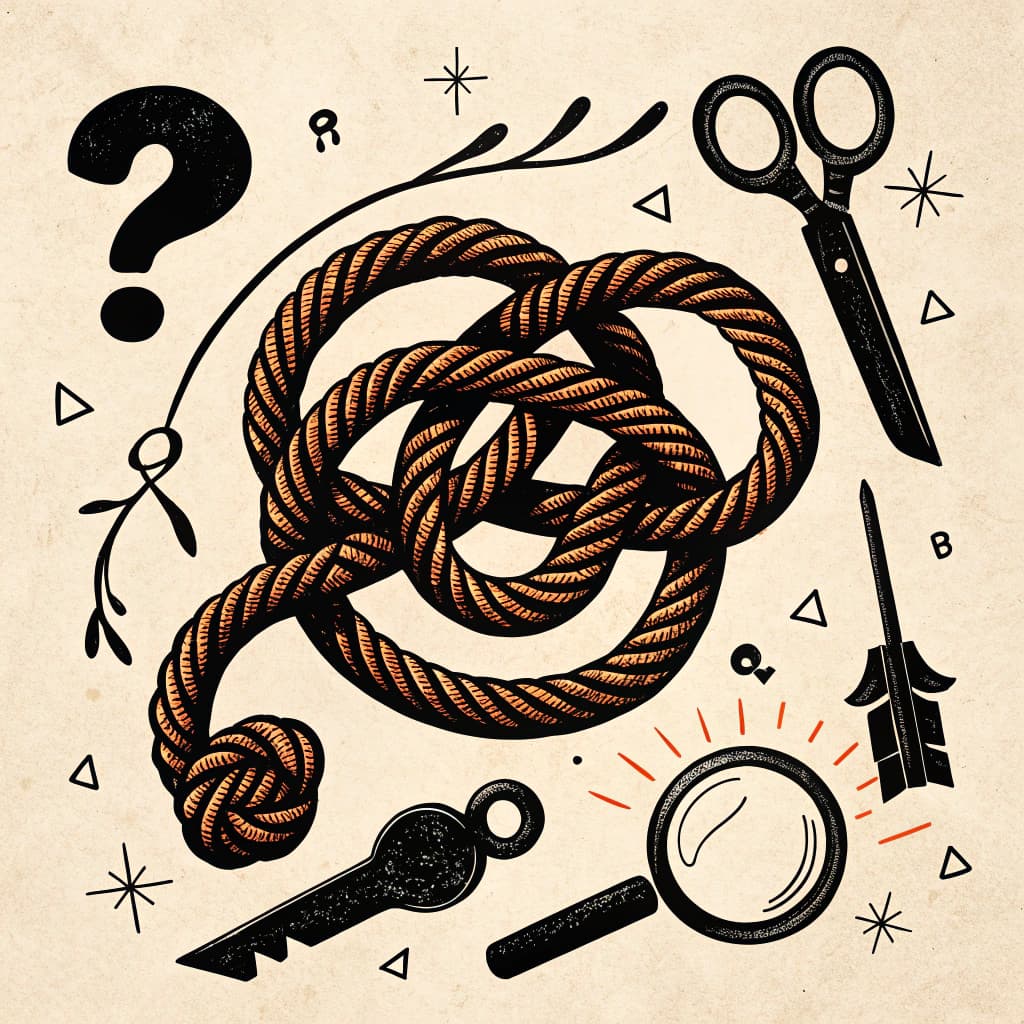
Tackle open-ended problems without predetermined solutions
Problem-Based Learning
Groups receive a complex, ill-structured problem with no single right answer. They must define the problem, identify what they need to know, research and gather information, develop possible solutions, and present their reasoning. The messy, ambiguous nature of the problem mirrors real-world challenges and develops resilience and analytical thinking.
What is Problem-Based Learning?
Problem-Based Learning (PBL), not to be confused with Project-Based Learning, which shares the same acronym in many educational contexts, was developed at McMaster University's medical school in the 1960s under Howard Barrows, who was troubled by a consistent gap between what medical students knew and what they could do with what they knew. Medical students who had performed brilliantly on examinations were arriving in clinical practice unprepared for the messiness and uncertainty of real patient problems. Barrows hypothesized that the problem was the instruction: abstract knowledge delivered before any need was felt for it doesn't transfer readily to the situations where it's eventually needed.
The solution he devised was to present students with an ill-structured problem first, a patient with symptoms, a history, and insufficient information, and let the problem drive the learning. Students working on the patient problem quickly discovered what they needed to know: they needed to know what this symptom pattern meant, what organs were involved, what the differential diagnoses were, how this type of condition was typically treated. The curriculum content became the answer to questions that the problem had raised rather than content deposited in advance of any need. Learning in response to a felt need produces dramatically better retention and transfer than learning in anticipation of a possible future need.
The ill-structured problem is the method's defining and most challenging feature. A well-structured problem has a clear solution pathway, specified relevant information, and a correct answer. An ill-structured problem has an uncertain solution pathway, ambiguous or incomplete information, and multiple defensible resolutions, just like real problems in medicine, law, engineering, public policy, and every other professional domain. The intellectual demands of ill-structured problems include: deciding what you need to know, finding and evaluating relevant information, making decisions with incomplete information, and justifying conclusions under uncertainty. These are the demands of professional practice, not of academic exercises.
The tutorial group, the small collaborative group of 5-8 students who work through the problem together, is the social unit in which PBL learning happens. The group's collaborative dynamics are as important as individual content knowledge: groups that work effectively together, distributing inquiry tasks, regularly integrating findings, and challenging each other's assumptions, learn more than groups where individuals simply divide the problem and work in parallel. Facilitating these group dynamics is the teacher's primary instructional role in PBL, which requires a fundamentally different set of skills than lecture-based teaching.
The facilitator's questioning, rather than answering, is the most demanding skill in PBL teaching. When a student group is stuck or heading in an unproductive direction, the PBL facilitator does not provide the missing information. They ask questions that redirect: "What do you know about this aspect of the problem?" "What would you need to find out to answer that?" "What does the evidence you've gathered so far suggest?" "What are you assuming that you haven't tested?" These meta-cognitive questions are designed to activate the inquiry process rather than shortcut it, because the inquiry process is what produces the learning.
Assessment in PBL is most powerful when it captures the quality of the reasoning process alongside the accuracy of the conclusions. A student who correctly defines the problem, systematically identifies what they need to know, finds credible evidence, and makes a well-reasoned recommendation, even if the recommendation is imperfect, has demonstrated more sophisticated thinking than a student who arrives at a correct recommendation through a superficial or accidental process. Process-assessment tools, such as observation notes, self-assessment forms, and peer evaluation of group contributions, are essential complements to product assessment in PBL contexts.
How to Run Problem-Based Learning: Step-by-Step
Present the 'Ill-Structured' Problem
7 min
Introduce a complex, real-world scenario that lacks a single right answer to trigger student curiosity and identify gaps in their current knowledge.
Develop a 'Need-to-Know' List
7 min
Facilitate a brainstorming session where students categorize what they already know, what they need to find out, and their initial hypotheses.
Assign Roles and Form Groups
6 min
Organize students into small collaborative teams and assign specific roles (e.g., researcher, recorder, facilitator) to ensure individual accountability.
Conduct Independent Research
7 min
Provide access to resources and allow students time to investigate the 'need-to-know' items, gathering data to support or refute their hypotheses.
Synthesize and Iterate
7 min
Bring teams back together to share findings, re-evaluate their initial ideas, and refine their problem-solving strategy based on new evidence.
Present the Proposed Solution
7 min
Have groups present their findings and solutions to an authentic audience, defending their reasoning and addressing potential counter-arguments.
Facilitate Metacognitive Reflection
7 min
Lead a debriefing session where students reflect on their learning process, the effectiveness of their collaboration, and how they would approach similar problems in the future.
BEFORE YOU TEACH THIS
Read the Teacher's Guide first.
Flip Education's Teacher's Guide walks you through how to facilitate any active learning lesson: mindset, pre-class checklist, phase-by-phase facilitation, and a Quick Reference Card you can print and bring to class.
Read the Teacher's Guide →Common variants
Single-problem PBL
One rich, ill-structured problem anchors a week. Groups define, research, solve, and present. The closest version to the original medical-school model.
Case-iteration PBL
The problem evolves across sessions as new information is released. Mirrors how real problems actually unfold and rewards flexible thinking.
Research Evidence for Problem-Based Learning
Hmelo-Silver, C. E. (2004, Educational Psychology Review, 16(3), 235-266)
PBL helps students develop flexible knowledge, effective problem-solving skills, self-directed learning skills, and effective collaboration skills through scaffolded inquiry.
Walker, A., Leary, H. (2009, Interdisciplinary Journal of Problem-Based Learning, 3(1), 12-43)
The meta-analysis found that PBL students consistently outperform traditional students on assessments of clinical performance and long-term knowledge retention.
Strobel, J., van Barneveld, A. (2009, Interdisciplinary Journal of Problem-Based Learning, 3(1), 44-58)
PBL is significantly more effective than traditional instruction for long-term retention of knowledge and the development of professional skills.
Common Problem-Based Learning Mistakes and How to Avoid Them
Problems with known answers
If students can look up the solution, they will, and the problem-solving process collapses. Design ill-structured problems that require judgment, tradeoffs, and disciplinary knowledge to navigate. The ambiguity is the pedagogical feature, not a flaw.
Students who immediately divide and research without analysing the problem first
Groups that rush to Google before analyzing the problem tend to collect information rather than integrate it. Require a structured problem analysis phase before any research: What do we know? What do we need to know? What assumptions are we making?
Facilitator who gives answers when groups struggle
When teachers resolve students' confusion directly, they remove the productive struggle that builds problem-solving skills. Respond to stuck groups with questions, not answers: 'What do you know about this?' 'What would you need to find out?' 'What have you tried?'
Assessment focused only on the final solution
In problem-based learning, the process of reasoning is more important than arriving at the 'right' answer. Assessment should capture the quality of the problem analysis, the research process, the reasoning behind the solution, and the reflection on limitations.
Problems disconnected from students' reality
Problems that feel abstract or irrelevant produce disengaged problem-solvers. Anchor problems in local, contemporary, or personally meaningful contexts. Students invest more deeply in problems where they feel the stakes are real, even in simulated form.
How Flip Education Helps
Printable problem scenario cards and analysis templates
Receive a set of printable problem scenario cards and analysis templates that guide students through the process of solving a curriculum-related challenge. These materials provide the necessary context and structure for a focused, single-session activity. Everything is ready to print and distribute.
Standards-based problems for critical thinking
Flip generates a problem scenario that is directly mapped to your curriculum standards and lesson topic, ensuring students must use their knowledge to develop a solution. The activity is designed for a 20-60 minute period, focusing on analytical reasoning. This alignment keeps the focus on your learning goals.
Facilitation script and numbered problem-solving steps
The generation includes a briefing script to set the stage and numbered action steps with teacher tips for managing the problem-solving process. You receive intervention tips for helping groups that struggle to identify the root cause of the problem or develop a viable solution. This structure keeps the activity focused and productive.
Reflection debrief and individual exit tickets
End the session with debrief questions that ask students to justify their solutions and relate them back to the core curriculum concepts. The printable exit ticket provides a way to assess individual understanding of the topic. A final note links the activity to your next curriculum goal.
Tools and Materials Checklist for Problem-Based Learning
- Whiteboards or large butcher paper for brainstorming
- Markers and sticky notes
- Access to computers/tablets (for research) (optional)
- Internet access (for research) (optional)
- Curated resource folders (physical or digital)
- Projector or interactive display (for presentations) (optional)
- Rubrics for assessment of process and product
- Timers for managing group work
Frequently Asked Questions About Problem-Based Learning
What is the difference between Problem-Based Learning and Project-Based Learning?
Problem-Based Learning focuses on the process of solving a specific, often ill-structured problem, whereas Project-Based Learning is centered on creating a final product or artifact. In PBL, the problem is the primary vehicle for learning new content, while projects often serve as a culminating application of previously learned material.
How do I assess students in a Problem-Based Learning environment?
Assessment in PBL should be multifaceted, focusing on both the final solution and the collaborative process through rubrics and self-reflection. Teachers should use formative assessments, such as 'need-to-know' lists and peer feedback, to monitor progress throughout the inquiry cycle.
What are the benefits of Problem-Based Learning for students?
PBL increases student engagement and develops essential 21st-century skills like critical thinking, collaboration, and self-directed inquiry. It bridges the gap between theory and practice, ensuring students understand the 'why' behind the curriculum through real-world application.
How do I manage a classroom during Problem-Based Learning?
Effective management requires establishing clear group norms and providing structured scaffolds like inquiry logs or timelines to keep teams on track. The teacher must circulate constantly, asking probing questions rather than providing direct answers to maintain the student-led nature of the work.
Is Problem-Based Learning effective for all grade levels?
PBL is most effective for upper elementary through university levels where students possess the foundational literacy and self-regulation skills needed for independent inquiry. For younger students (K-2), the model requires significantly more teacher scaffolding and shorter, more concrete problem scenarios.
Classroom Resources for Problem-Based Learning
Free printable resources designed for Problem-Based Learning. Download, print, and use in your classroom.
Problem Analysis Worksheet
Students break down an ill-structured problem into what they know, what they need to learn, and how they will investigate.
Download PDFProblem-Based Learning Reflection
Students reflect on their problem-solving process, not just the solution they reached.
Download PDFProblem-Based Learning Team Roles
Assign roles that support the iterative cycle of problem analysis, research, and solution development.
Download PDFProblem-Based Learning Prompts
Prompts that guide teams through each phase of the problem-based learning cycle.
Download PDFSEL Focus: Responsible Decision-Making
A card focused on making evidence-based decisions when faced with complex, ill-structured problems.
Download PDFRelated
Methodologies Similar to Problem-Based Learning
Ready to try this?
- Read the Teacher's Guide →
- Generate a mission with Problem-Based Learning →
- Print the toolkit after generating
Generate a Mission with Problem-Based Learning
A complete lesson plan, aligned to your curriculum.