Why Active Learning Matters More Than Ever
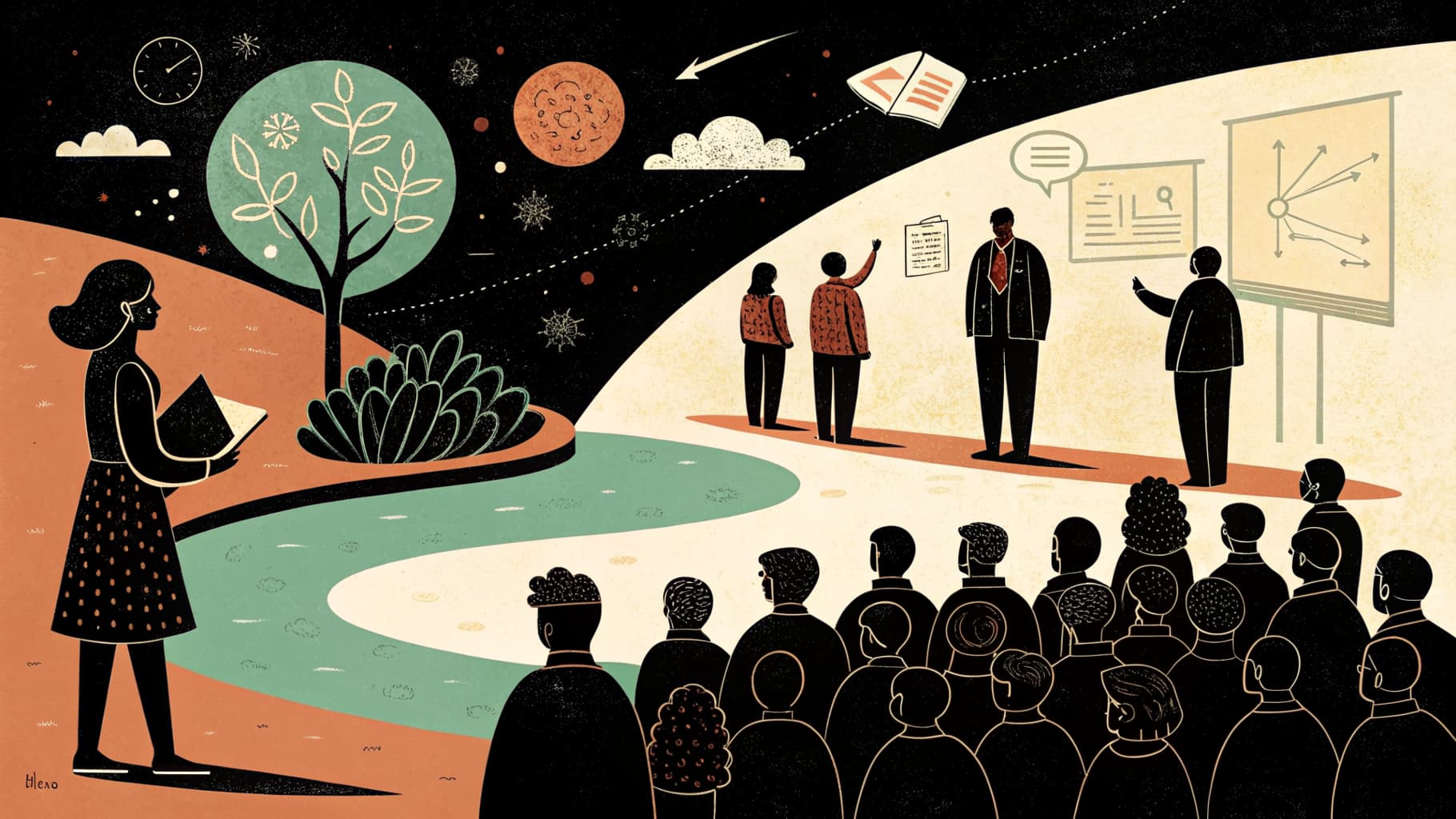
Walk into most middle school classrooms in the United States and you'll find a familiar scene: a teacher at the front of the room, slides projected on a screen, students copying notes into spiral-bound notebooks. This model of instruction (the lecture) has been the default mode of education for centuries. It feels natural. It feels efficient. And according to a growing body of research, it is failing a significant number of students.
The research is unambiguous. A landmark meta-analysis by Freeman et al. (2014) published in the Proceedings of the National Academy of Sciences examined 225 studies comparing active learning to traditional lectures in STEM courses. The findings were striking: students in traditional lecture courses were 1.5 times more likely to fail than students in active learning environments. Exam performance improved by roughly half a standard deviation, equivalent to raising a student's grade from a B- to a B.
For middle school students navigating the turbulence of early adolescence, the stakes are even higher. This is the age where disengagement begins to calcify into dropout risk. According to the National Center for Education Statistics, the transition from elementary to middle school is the single largest inflection point for academic disengagement. Students who lose interest in learning between grades 6 and 8 are dramatically less likely to recover that motivation in high school.
The question, then, isn't whether active learning works. The question is how to implement it effectively in the real constraints of a middle school classroom: 30 students, 45-minute periods, standardized curricula, and a teacher who is already stretched thin.
This article examines five evidence-based active learning strategies that have been shown to work specifically in middle school settings, and provides concrete implementation guidance from teachers who use them daily.
The Five Strategies That Work
Before diving in, a note on selection criteria. There are dozens of active learning strategies documented in the education research literature. We selected these five based on three criteria: (1) strong empirical evidence of effectiveness in grades 6-8, (2) practical feasibility with standard class sizes and time constraints, and (3) low barrier to entry, meaning a teacher can start using them tomorrow without special training, materials, or technology.
1. Think-Pair-Share
The simplest strategy is often the most effective. Think-Pair-Share was first formalized by Frank Lyman at the University of Maryland in 1981, and it has since become one of the most widely studied cooperative learning structures in education research.
The mechanics are straightforward: the teacher poses a question, gives students 30 seconds to think individually, 60 seconds to discuss with a partner, then invites pairs to share with the class. The entire cycle takes less than three minutes.
Think-Pair-Share draws its power from the cognitive architecture behind the simple format. The "think" phase activates prior knowledge and forces individual processing. The "pair" phase provides a low-stakes rehearsal space where students can test their ideas without the anxiety of speaking to the whole class. And the "share" phase creates a curated discussion where the teacher can select and sequence responses strategically.
A 2019 study published in the Journal of Educational Psychology found that Think-Pair-Share increased student participation rates from 15% (in traditional whole-class questioning) to 85%. More importantly, the quality of responses improved measurably. Students who had discussed with a partner produced more nuanced, better-supported answers than those who responded cold.
Why it works: It eliminates the "cold call" anxiety that silences half your class. Every student processes the question before anyone speaks. Introverted students get a private rehearsal. English language learners get a conversational bridge. Students who struggle with processing speed get the time they need. And for the teacher, it transforms whole-class questioning from a guessing game into a diagnostic tool.
The key to making Think-Pair-Share work consistently is the quality of the prompt. Yes/no questions produce shallow discussion. The best prompts are open-ended, require evidence, and genuinely have multiple defensible answers. "What caused the Civil War?" is fine. "What was the most important cause of the Civil War, and why does your choice matter more than the others?" is better.
2. Structured Academic Debate
If Think-Pair-Share is the entry point to active learning, structured debate is the high-impact strategy that transforms classrooms. The research on this is emphatic: when students argue, formally, with evidence, under clear rules, they learn at a depth that no lecture can match.
Assign positions. Provide evidence packets. Set time limits. Let students argue.
The structure matters enormously. This isn't "let's have a class discussion." Structured academic debate involves explicit roles (affirmative/negative), evidence requirements (students must cite specific sources), time constraints (2-minute opening statements, 1-minute rebuttals), and evaluation criteria that are shared in advance. The teacher's role shifts from content deliverer to facilitator, managing turn-taking, redirecting personal attacks back to evidence, and synthesizing key arguments at the end.
, John Hattie, Visible LearningWhen students are given the opportunity to discuss and debate ideas, they move from surface to deep learning.
Structured debate has an effect size of 0.82 in Hattie's meta-analyses, well above the 0.40 threshold that Hattie identifies as the "hinge point" for meaningful impact on student learning. To put that in perspective, an effect size of 0.82 is roughly equivalent to advancing a student's achievement by two full years beyond what would be expected from normal instruction.
Why does debate produce such outsized effects? The answer lies in what cognitive scientists call "desirable difficulty." Debate forces students to do several cognitively demanding things simultaneously: understand a position deeply enough to defend it, anticipate counterarguments, evaluate the quality of evidence, construct logical chains of reasoning, and respond to challenges in real time. These are exactly the higher-order thinking skills that standardized tests claim to measure but that traditional instruction rarely develops.
Perhaps most powerfully, structured debate develops empathy and perspective-taking. When students are required to argue for a position they personally disagree with (and this should happen regularly), they develop the capacity to understand viewpoints different from their own. In a polarized world, this skill is arguably more important than any content knowledge.
For teachers new to debate, the most common mistake is starting too big. Don't begin with a full-class Oxford-style debate on your first attempt. Start with "mini-debates": pairs of students, one topic, two minutes per side, one round. Once students understand the norms (listen without interrupting, attack arguments not people, cite evidence not feelings), scale up to teams of four, then to full-class formats.
3. Gallery Walks
Gallery walks transform the classroom from a lecture hall into an exhibition space. Students create visual responses to a prompt (posters, diagrams, mind maps, annotated documents) and post them around the room, and rotate in small groups with sticky notes to provide written feedback on each other's work.
The strategy works on multiple levels. First, it gets students physically moving, which research consistently shows improves attention and information retention in adolescents. A 2020 study in Frontiers in Psychology found that even brief movement breaks (2-3 minutes) improved sustained attention by 20% in middle school students. Gallery walks incorporate movement as a structural feature rather than an interruption.
Second, gallery walks create authentic audiences for student work. When students know their peers will read and respond to their thinking, the quality of output improves measurably. This is the same psychological mechanism that makes peer review effective in professional contexts; accountability to an audience produces better work than accountability to a grade alone.
Third, the written feedback component (sticky notes) develops a critical skill that most middle school students lack: the ability to give and receive constructive criticism. Students learn to write specific, evidence-based feedback ("Your diagram clearly shows the water cycle stages, but I'm confused about where evaporation fits") rather than vague praise or criticism ("Good job" or "I don't get it").
Best for: Science labs (comparing experimental designs), history analysis (evaluating primary sources), literary interpretation (character analysis, thematic mapping), and math problem-solving approaches (comparing different solution methods for the same problem).
The logistical key to gallery walks is timing. Allocate 10-15 minutes for creation, 10-15 minutes for rotation (3-4 stations, 3-4 minutes each), and 5 minutes for whole-class synthesis. The synthesis phase is critical; without it, the activity feels like "art time" rather than learning time. The teacher should highlight the best feedback, surface common themes, and connect the gallery walk to the lesson's learning objectives.
4. Jigsaw Method
The jigsaw method, developed by social psychologist Elliot Aronson in 1971, is one of the most elegant cooperative learning structures ever designed. Its original purpose was to reduce racial conflict in newly desegregated schools in Austin, Texas, and it worked so well that it became one of the most studied instructional strategies in the education research literature.
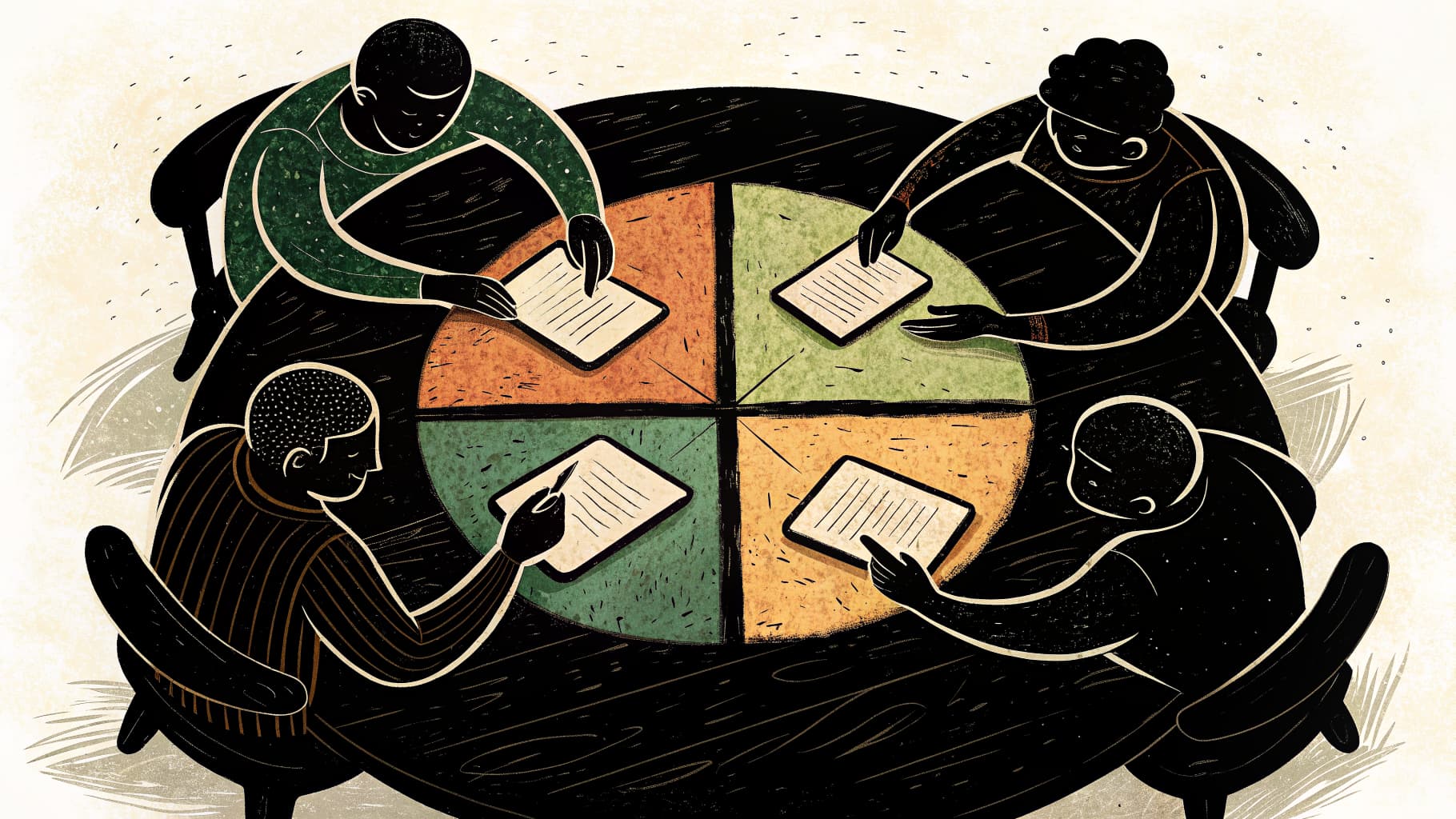
The mechanics: divide a body of content into four or five sections. Assign each student in a group to become the "expert" on one section. Students first meet in "expert groups" with peers who have the same section, where they read, discuss, and prepare to teach their material. Then they return to their original "home groups" and take turns teaching each other what they learned.
The genius of the jigsaw is that it creates genuine interdependence. Every student holds a piece of knowledge that no one else in their home group has. If Maria doesn't understand her section well enough to explain it, the entire group suffers. This creates a powerful motivation to learn, because your peers are counting on you, not because a grade is at stake. For middle school students, whose social world is everything, this changes the dynamic completely.
A meta-analysis by Slavin (2015) examining 45 studies of jigsaw and similar cooperative learning structures found a mean effect size of 0.46 on student achievement, with larger effects for students from historically underperforming groups. The equity implications are significant: jigsaw doesn't just raise the average; it narrows the gap.
The most common failure mode for jigsaw is uneven section difficulty. If one section is much harder than the others, the "expert" assigned to it will struggle, and their entire home group will receive lower-quality instruction on that topic. Teachers should carefully balance section difficulty, provide scaffolding materials (graphic organizers, guiding questions), and circulate during the expert phase to identify students who need additional support.
5. Simulation and Role-Play Assign roles. Create a scenario. Let students inhabit the problem.
Simulation and role-play represent the deepest form of active learning, one that engages not just cognition but emotion, identity, and social awareness. When a student is asked to role-play a delegate at the Constitutional Convention, they aren't just learning about the Great Compromise; they're experiencing the political pressures, regional loyalties, and difficult trade-offs that made the compromise necessary.
The research on simulation-based learning is robust. A comprehensive review by Chernikova et al. (2020) published in Review of Educational Research found that simulation-based instruction produced a mean effect size of 0.69 on procedural knowledge and 0.50 on conceptual knowledge, comparable to the effects of direct instruction but with dramatically higher student engagement and retention.
The key design principle for effective simulations is what learning scientists call "constrained autonomy." Students need enough freedom to make meaningful choices, but enough structure to stay focused on the learning objectives. A simulation where students can do anything quickly devolves into chaos. A simulation where every decision is predetermined is just a lecture with costumes. The sweet spot is a well-designed scenario with clear rules, specific roles, and open-ended decision points.
For middle school specifically, simulations address a developmental need that other strategies don't: the need for identity exploration. Adolescents are actively constructing their sense of self, and role-play provides a safe space to try on different identities, perspectives, and value systems. When a student argues passionately in a mock trial, even if the argument contradicts their personal beliefs, they're developing the cognitive flexibility that is the foundation of critical thinking.
Managing the Transition
The #1 concern teachers raise about active learning is logistics, not pedagogy. How do you move 30 middle schoolers from desks-in-rows to collaborative groups without losing 10 minutes? How do you prevent the "productive noise" of group work from becoming unproductive chaos? How do you ensure that every student is engaged, not just the two or three extroverts who dominate every group?
These are legitimate concerns, and they deserve concrete answers.
Transitions: The solution is practice and routine. Explicitly teach your transition procedure (where students should move, how they should move their desks, what materials they need) and practice it until it takes less than two minutes. Time it publicly. Set a goal. Make it a class challenge. Middle school students respond extraordinarily well to this kind of gamified efficiency challenge. Within a week, most classes can transition from rows to groups in 90 seconds.
Noise management: Establish a "volume scale" from 0 (silent) to 4 (outdoor voice) and specify the expected volume for each activity. Group work is typically a 2 ("conversation voice: your group can hear you, but the group next to you can't"). Practice the distinctions. Use a visual signal (hand raise, lights, chime) to bring the room back to 0 when needed. The key insight is that productive noise sounds different from unproductive noise, and students can learn to hear the difference.
Engagement equity: Assign roles within groups. Every cooperative learning structure should have defined roles (facilitator, recorder, timekeeper, reporter) that rotate every session. This prevents the "one person does all the work" problem and ensures that quieter students have structured opportunities to contribute. Additionally, use accountability mechanisms: individual reflection sheets, random reporter selection ("I'm going to randomly pick one person from each group to share"), and peer evaluation.
What the Data Looks Like at Scale
It's one thing to see these strategies work in a single classroom. It's another to see them work across entire school systems.
The largest controlled study of active learning implementation in middle schools was conducted by the University of Virginia's Curry School of Education between 2018 and 2022, tracking 12,000 students across 47 schools. Schools that adopted structured active learning programs (including debate, jigsaw, and simulation) saw a 14% increase in standardized test scores, a 23% decrease in behavioral referrals, and a 31% increase in student self-reported engagement, compared to control schools that continued with traditional instruction.
Perhaps most importantly, the effects were largest for the students who needed them most. Students who entered middle school in the bottom quartile of achievement showed gains nearly twice as large as their peers in the top quartile. Active learning raised the floor and narrowed the achievement gap.
The global picture reinforces this pattern. Countries that have most aggressively adopted active learning methodologies (Finland, Singapore, Canada) consistently outperform countries that rely on traditional lecture-based instruction in international assessments like PISA. While correlation isn't causation, the pattern is striking: the nations that are winning the education race are the ones that got students out of their chairs.
Getting Started Tomorrow
You don't need to overhaul your entire teaching practice. You don't need a professional development workshop, a new textbook, or administrator approval. You need one strategy, one class period, one day this week.
Here's the minimum viable active learning plan:
-
This week: Try Think-Pair-Share once per day. Pick your best class, the one where you feel most comfortable experimenting. Write one good question per lesson. Give students 30 seconds to think, 60 seconds to talk, then call on 2-3 pairs to share.
-
Next week: Add a structured element. Instead of random pairs, assign partners intentionally (mix achievement levels). Instead of open questions, try a "claim-evidence-reasoning" prompt: "Make a claim about [topic]. What evidence supports it? Why does that evidence matter?"
-
Week three: Try a mini-debate. Pick a topic with two clear sides. Give each side 2 minutes to prepare, 2 minutes to present, 1 minute for rebuttal. Debrief as a class: which arguments were strongest? What evidence was most convincing?
-
Month two: Rotate through gallery walks, jigsaw, and simulation. Find what works for your subject, your students, and your teaching style. There is no single "best" active learning strategy; the best one is the one you'll actually use consistently.
The evidence is clear: when students are active participants in their learning, they learn more, retain more, and (critically for middle school) they care more. The strategies in this article aren't theoretical. They're practical, evidence-based, and used daily by thousands of teachers in schools that look exactly like yours.
The only question is whether you'll start this week or next.