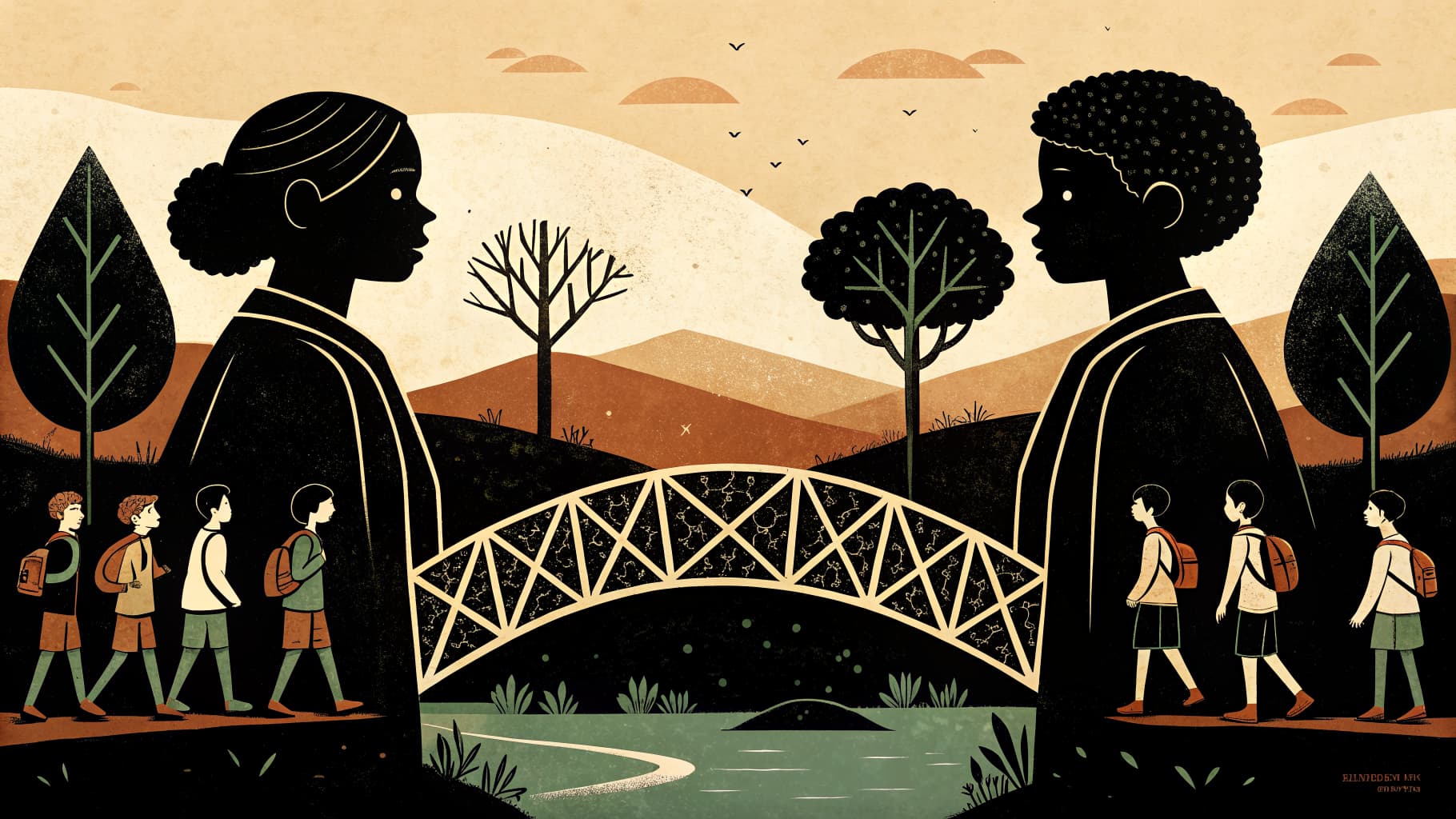
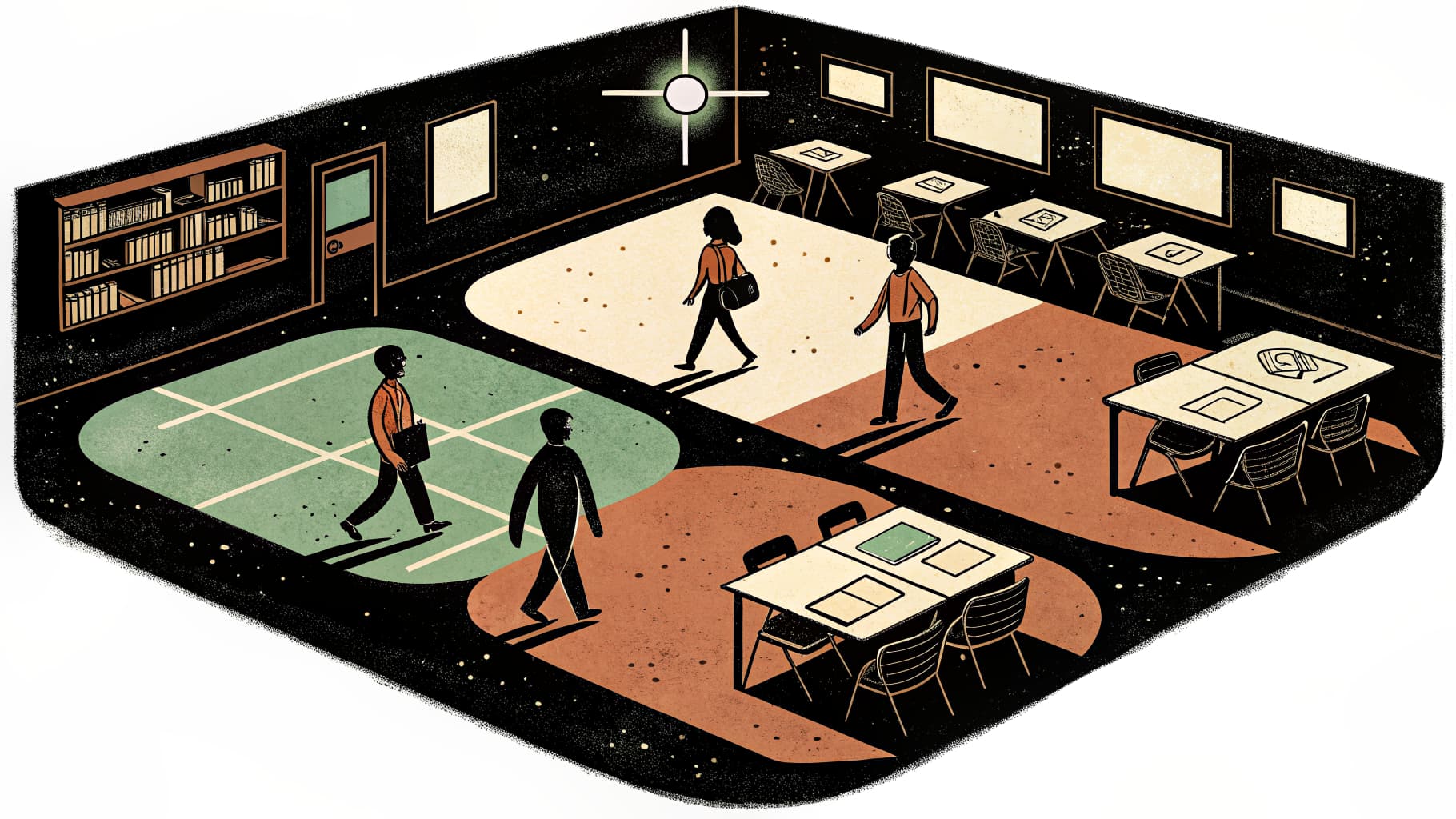
Picture a class of thirty students discussing the causes of World War I. The teacher opens the floor. Three hands go up, the same three as always. The other twenty-seven watch.
Now picture the same question run as a snowball. Every student writes for four minutes. Then they talk to one partner. Those pairs join another pair. By the time the conversation reaches the whole class, every student has already defended their position twice. The room is thinking, not watching.
That's what the snowball strategy does when it's set up correctly. Here's how.
What Is Snowball?
The word "snowball" covers two related but structurally different classroom activities.
The first is the paper snowball fight: students write a response on paper, crumple it into a ball, throw it across the room, retrieve someone else's, read it, and respond. It's used as a review tool for topics like fractions, grammar, and math problem-solving, and as an icebreaker where students share personal facts, energetic, tactile, and genuinely enjoyable for students who spend most of their day sitting.
The second, and the focus of this guide, is the snowball discussion. Students begin with private reflection, then progressively merge into larger groups: individual to pair, pair to quad, quad to octet, octet to whole class. Kennesaw State University uses snowball as both a discussion and assessment method for developing collaborative reasoning across disciplines. The structure itself is the lesson: every student experiences how collective understanding accumulates through synthesis.
Both methods share the same core logic, start small, accumulate. But the snowball discussion is the one that changes how students think, not just how they feel about your class.
How Snowball Discussion Works
Elizabeth Barkley, K. Patricia Cross, and Claire Howell Major document in Collaborative Learning Techniques (Jossey-Bass, 2014) how scaffolded discussion structures like snowballing increase student engagement and build higher-order thinking through peer-to-peer knowledge construction. The mechanism matters: students aren't just talking, they're synthesizing and defending at each stage.
Here's how to run each phase.
Step 1: Pose a Central Prompt
Start with a question that genuinely requires thinking. "List three causes of World War I" produces a thin snowball, everyone has roughly the same answer and discussion stalls. "Which cause of World War I was most preventable, and why?" gives students real ground to disagree on.
Open-ended prompts work best when students hold different prior knowledge, personal experiences, or values that produce genuinely different starting positions. For topics where all students have essentially the same information and no particular stake, the snowball produces convergence rather than synthesis, which is less instructionally valuable.
Before choosing your prompt, ask whether it scales: can the expected response format hold at pair, quad, and octet levels? Questions with clear dimensions, strongest argument, most significant factor, best solution, scale better than open-format questions that collapse under the weight of eight different five-part arguments.
Step 2: Individual Reflection
Give students 3-5 minutes of silent writing before any pair discussion begins. This is the most important phase in the entire activity.
Pairs compound individual insight, they cannot generate thinking that wasn't there. Michael Prince's 2004 meta-analysis in the Journal of Engineering Education confirmed that collaborative activities requiring students to explain their reasoning to peers significantly improve conceptual understanding, but the explaining requires something substantive to explain first. Students who enter pairing without a formed position defer to whoever speaks first, and the snowball accumulates only one person's thinking.
Set a visible timer. Hold the line.
Step 3: Pair Discussion
Students share their individual responses with one partner. The goal is not just to compare answers but to find where they agree, where they differ, and why. Instruct pairs to arrive at a shared synthesis, one position they can both represent in the next stage, even if it includes acknowledged tensions.
For topics where diversity of thinking is educationally valuable, assign pairs rather than allowing self-selection. Self-selected pairing clusters students who think similarly. Teacher-assigned pairs, based on different expressed initial positions or varied background knowledge, produce richer accumulation at every subsequent stage.
Step 4: Merge into Groups of Four
Two pairs join to form a quad. Each pair presents their synthesis before any new discussion begins, this prevents the quad's conversation from being captured by the first voice. A structured round-robin or simple speaking token ensures all original thinking surfaces before the group moves toward consensus.
The quad then works toward a shared position or a structured set of key points they can represent at the next stage.
Step 5: Expand to Groups of Eight
Merge the quads. This stage tends to move faster, the thinking has already been compressed twice, so groups work more efficiently. Ask each group to prepare a 60-second summary of their collective position, including any unresolved disagreements they want to surface with the whole class.
If time is tight, this is the stage to shorten, not the debrief that follows.
Step 6: Whole-Class Debrief
Bring everyone back together. Each group of eight shares their summary. This is where the snowball reveals its full value: groups that started with similar individual inputs often arrive at different conclusions, and examining why is frequently more instructive than the conclusions themselves.
Ask: "What did Group A's discussion produce that Group B's didn't?" The meta-level question, about thinking process rather than content, develops analytical habits that transfer well beyond any single lesson.
Tips for Success
Protect individual think time above everything else
The single most common failure mode in snowball discussions is cutting the individual reflection phase to save time. When students enter pairing without formed ideas, they defer to whoever speaks first, and you've built a snowball around one student's thinking. Three to five minutes of genuine individual writing produces materially richer pair and group exchanges. The time investment pays itself back at every subsequent stage.
Assign pairs with intention
When perspective diversity is the goal, teacher-assigned pairs consistently outperform student-selected ones. Base your pairings on expressed initial positions, prior assessment data, or varied background knowledge. Random assignment is better than self-selection for most snowball discussions.
Hold each pair accountable in the quad stage
As groups grow, discussion tends to be captured by whoever speaks first. In groups of four or more, require that each pair's synthesis be presented before any new synthesis begins. This is a procedural detail, not a nicety, it's what ensures the snowball actually accumulates different perspectives rather than amplifying one.
Save snowball for the right questions
The snowball strategy's primary value is building collective understanding on open-ended problems before whole-class discussion. For simple recall questions, a quick quiz does that work faster and with less complexity. Reserve snowball for questions where genuinely different perspectives exist and combining them produces richer understanding than any individual could reach alone.
Know when to stop expanding
Groups larger than eight tend to fragment or be dominated by a small number of vocal participants. For large classes, stop at octets and run the debrief as a structured share-out from each group rather than merging into groups of sixteen. The Kennesaw State model recommends explicit accountability structures as group size increases, structure doesn't become less important as the group grows, it becomes more important.
Adapting for Grade Level and Subject
Snowball discussion works best from grades 6 through 12, where students have enough prior knowledge and contextual grounding to form genuine independent positions before pairing. From grades 3-5, the structure is still usable but benefits from tighter scaffolding: sentence starters for the individual phase, structured pair-share prompts, and a shorter progression, individual to pair to whole class, skipping the quad and octet stages entirely.
For K-2, the paper snowball fight is the better entry point. TheDailyCAFE uses it as a literacy and engagement activity that builds reading and response skills in a low-stakes, high-energy format before students are ready for structured synthesis.
Subject-wise, the discussion method thrives in ELA, Social Studies, Science, and SEL, disciplines where questions carry genuinely valid different answers. In math, it works well for comparing problem-solving strategies: "How did you approach this problem, and what's different about your approach compared to your partner's?" works better than answer verification, where convergence is the point.
For online and hybrid contexts, the snowball discussion adapts well to virtual breakout rooms: individual reflection in the main room, breakout rooms for pairs and quads, and the whole-class debrief back in the main session.
, [Collaborative Learning](/blog/25-student-engagement-strategies-a-research-backed-guide-for-modern-k-12-classrooms) Techniques, Barkley, Cross & Major (2014)Scaffolded discussion techniques that move from private reflection to progressive group synthesis increase engagement and develop higher-order thinking through peer-to-peer knowledge construction.
FAQ
Build Your Snowball Lesson with Flip Education
Flip Education generates complete snowball discussion plans aligned to your curriculum standards and grade level. Each plan includes a prompt designed to work at every group size, a numbered facilitation script with timing guidance for each expansion stage, student response templates for tracking thinking across rounds, and a synthesis debrief with printable exit tickets for individual assessment.
The plans also include teacher intervention tips for groups that stall at synthesis, so you spend class time facilitating thinking rather than managing logistics.