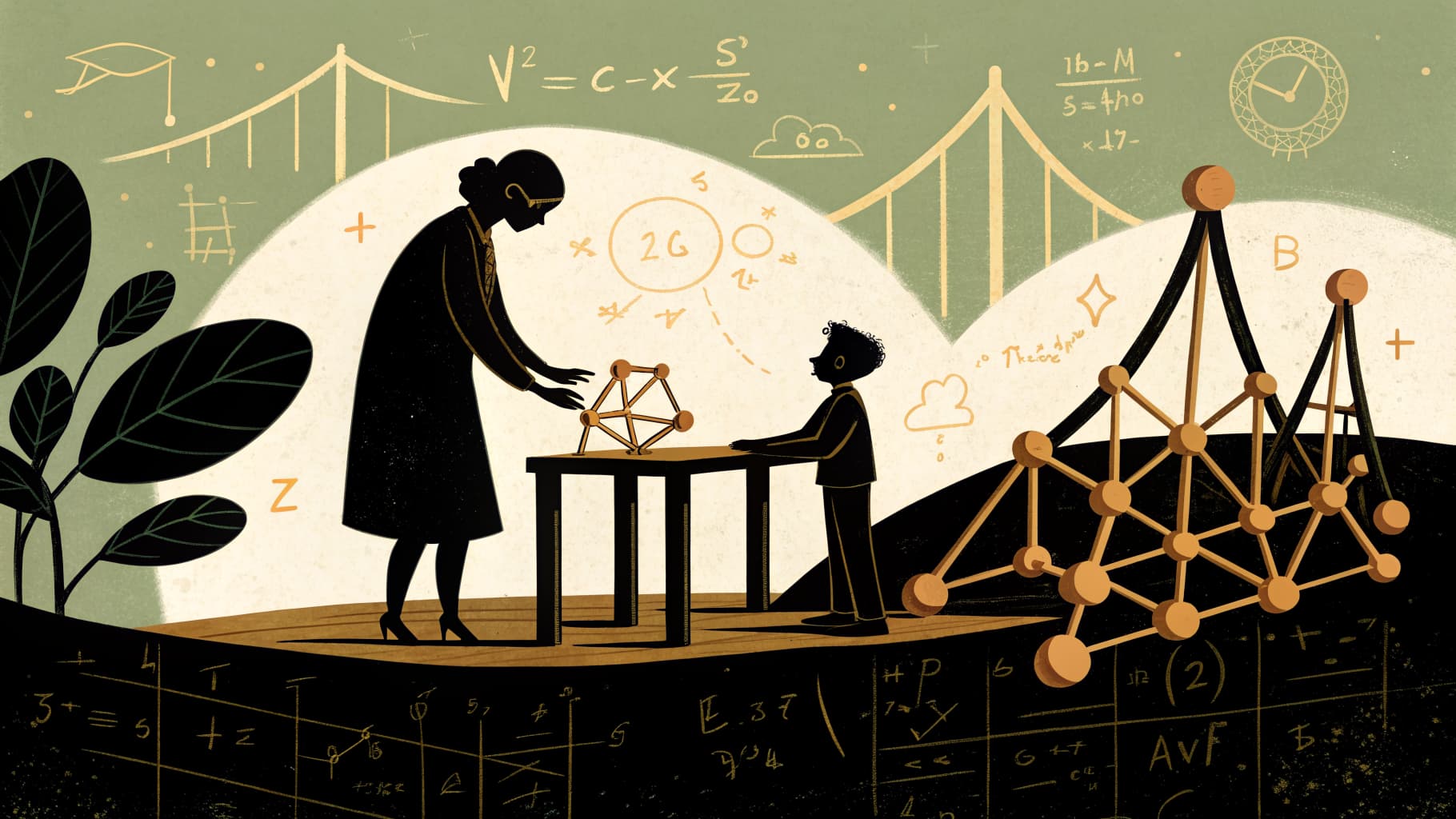
Ask most students what they remember from social studies, and you'll hear a mix of state capitals, presidential names, and maybe a timeline or two. Ask their teachers what they wish they had more time to teach, and the answers are almost always the same: primary sources, current events, student debate, civic participation. The gap between those two realities is exactly what the current generation of social studies lesson plans is designed to close.
Over the past decade, a clear shift has taken place across K-12 social studies classrooms. Teachers are moving away from read-the-chapter, answer-the-questions instruction and toward frameworks that treat students as historians, geographers, and citizens who analyze evidence and form their own conclusions. This article walks through what that shift looks like at each grade band, which free resources support it, and how AI tools are helping teachers do more of it without burning out.
The Evolution of Social Studies Lesson Plans
The most significant structural change in social studies curriculum since the 1990s came through the College, Career, and Civic Life (C3) Framework, published by the National Council for the Social Studies (NCSS). The C3 Framework reoriented lesson design around four dimensions: constructing compelling questions, applying disciplinary concepts, evaluating sources and evidence, and taking informed action.
That last dimension matters. Social studies lesson plans built on the C3 model don't end with a test. They end with students producing something concrete: a letter to a local official, a community presentation, or a documented argument that connects school learning to civic reality.
The framework's influence has spread steadily. Many state standards revisions since 2015 have incorporated C3 language directly, and major curriculum publishers have redesigned their social studies sequences around its inquiry arc. For classroom teachers, this means the lesson plan formats that mattered a decade ago (objectives, vocabulary, direct instruction, worksheet) are giving way to something more open-ended and more demanding to design.
The challenge is real. Building a compelling question, sourcing appropriate primary documents, and scaffolding civic action takes more planning time than a textbook chapter. That's where free resources and AI tools become genuinely useful.
Elementary (K–5): Building Civic Foundations
Young students are naturally curious about how their community works. The most effective social studies lesson plans for K–5 capitalize on that curiosity rather than suppressing it with abstract content.
At the kindergarten and first-grade level, strong lessons center on family, neighborhood, and school community. Second grade typically expands to local government and geography. By third through fifth grade, students are ready for basic economic concepts, regional geography, and the beginnings of US history, including honest conversations about whose stories get told and whose get left out.
PBS LearningMedia offers a substantial free library organized by grade band and topic. Elementary teachers will find video segments, interactives, and lesson guides aligned to common standards. The materials are particularly strong for geography and civics, and many include discussion guides that support the kind of questioning the C3 Framework emphasizes.
What Elementary Social Studies Lessons Should Do
- Ground abstract concepts in local reality. Don't teach "community helpers" as a generic category. Have students identify specific people in their own school community, interview them if possible, and map how those roles connect.
- Introduce primary sources early. A first-grader can look at a photograph from 50 years ago and identify what's the same and what's different about their town. That's historical thinking.
- **Build vocabulary through context, not definition lists.**Terms like "vote," "law," and "citizen" should emerge from classroom activities, such as a mock classroom election or a rule-making discussion, before they appear on any assessment.
National Geographic Education also provides elementary-level geography resources, including free maps and standards-aligned lesson frameworks that connect geography concepts to current events students can actually access.
Middle School (6–8): Expanding Perspectives
Middle school is where social studies instruction often gets harder to do well. The content gets more complex, covering world history, US history, and economics, and students simultaneously become more aware of contradictions between the ideals they've been taught and the historical record.
The best social studies lesson plans for grades 6–8 lean into that tension rather than smoothing it over. Primary source analysis is the core tool here. When students read an excerpt from a colonial-era law alongside a firsthand account from an enslaved person, they're doing the work historians do: comparing perspectives, interrogating context, identifying what's missing.
PBS LearningMedia remains valuable at this level, with documentary clips and primary source collections tied to the major units in most middle school sequences. The OER Project offers full free courses in world history and US history, including teacher-facing resources, assessments, and reading materials calibrated for middle school readers.
Culturally Responsive Teaching at the Middle Level
One of the clearest findings in recent social studies pedagogy is that student engagement rises when curriculum connects to students' own cultural backgrounds and community experiences. Gloria Ladson-Billings, whose foundational work on culturally responsive pedagogy dates to the early 1990s, argued that students need to see their own histories and communities as legitimate subjects of study, not as additions to a standard curriculum.
For middle school social studies, this means designing units that don't treat non-Western histories as supplementary. It means using literature, oral histories, and artifacts alongside traditional textbook content. Many teachers who have implemented culturally responsive social studies instruction find that restructuring units to center students' actual communities makes a meaningful difference in engagement and depth of understanding.
A critical implementation note: culturally responsive teaching in social studies requires modifying the curriculum itself, not just the classroom environment. Hanging flags from different countries in the hallway is not culturally responsive instruction. Asking students to examine how immigration policy affected their own family's history, and treating that examination as rigorous social studies work, is.
High School (9–12): Advanced Inquiry and Civics
High school social studies covers the most complex terrain, including AP US History, AP World History, government, economics, and geography, and prepares students to participate in civic life as adults. The lesson design challenges are correspondingly significant.
Strong high school social studies lesson plans balance content coverage with skill development. Advanced Placement courses in particular demand that students move fluently between specific historical evidence and broader interpretive arguments. The College Board provides extensive free resources for AP teachers, including released exam prompts and scoring rubrics that can anchor unit-level planning.
For government and civics teachers, the 2024 election cycle generated an enormous volume of usable primary sources: candidate debates, campaign materials, voting data, polling analysis. These materials make abstract concepts like electoral college mechanics or campaign finance concrete and current. Teachers who built units around the 2024 cycle have resources that will remain useful for years as comparative historical documents.
Financial literacy is increasingly embedded in state social studies standards as a graduation requirement. This creates planning challenges because many social studies teachers haven't had formal economics preparation. The Council for Economic Education provides free lesson plans and professional development specifically for K-12 teachers who need to build economics and personal finance units from scratch.
The OER Project's Big History course offers one of the most ambitious free curriculum sequences available for high school: a full-year interdisciplinary course spanning 13.8 billion years of history, integrating science, social studies, and humanities. It's an unusual choice, but teachers report high student engagement and genuine cross-curricular skill development.
AI-Powered Lesson Planning for Social Studies
The most common complaint social studies teachers make about inquiry-based lesson design is the time it requires. Building a compelling question, sourcing and vetting primary documents, writing differentiated reading supports, designing a performance task, a single well-built unit can take 10 to 15 hours of planning time outside the actual instructional sequence.
AI lesson planning tools are changing that calculation. Flip Education's lesson plan generator lets teachers input a topic, grade level, and standards focus, then receive a full structured lesson plan (including a driving question, suggested primary sources, discussion protocols, and assessment options) in under five minutes. Teachers then modify what the generator produces, applying their knowledge of their specific students and local context.
The key distinction is between AI that replaces teacher judgment and AI that accelerates teacher planning. The former is a problem. The latter is a genuine time-saving tool that lets experienced teachers do more of what they're trained to do: adapt, respond, and make professional decisions in the classroom.
For social studies specifically, AI tools work well when teachers use them to:
- Generate initial lesson structures they then modify with locally relevant content
- Draft differentiated reading versions of primary sources at different Lexile levels
- Create discussion questions at varying cognitive levels from a single document
- Build rubrics for performance tasks aligned to specific state standards
The limitation is real: AI tools cannot vet primary sources for accuracy, cannot replace a teacher's understanding of student needs, and should not be used to generate historical claims without verification. Social studies teachers using AI tools need to treat the output as a first draft requiring expert review, not a finished product.
Differentiation Strategies for IEP and 504 Students
Social studies presents specific differentiation challenges. The content often involves dense text, including primary sources, textbook passages, and informational articles, along with complex abstract concepts that assume background knowledge students may not have.
For students with IEPs or 504 plans, effective differentiation in social studies means modifying three things: how information is presented, how students process it, and how they demonstrate understanding.
Text complexity modifications are the most common need. A primary source document written in 18th-century legal language is inaccessible to most middle schoolers without support; for students with reading-based learning disabilities, it's a barrier to any historical thinking at all. Teachers can use AI tools to generate simplified versions of primary source texts at multiple reading levels, then have students compare the simplified version with the original to analyze how language carries meaning and power.
Processing supports include graphic organizers, guided note-taking templates, structured discussion roles, and chunked reading with embedded comprehension checks. For students who struggle with working memory, breaking a document analysis into discrete steps (observe, question, infer, connect) gives them a scaffold they can use independently across multiple lessons.
Assessment flexibility is often the least-considered piece. A student with expressive language challenges may understand the causes of the Civil War deeply but struggle to demonstrate that understanding in a five-paragraph essay. Allowing oral responses, annotated timelines, visual representations, or recorded explanations opens up the assessment without reducing the rigor of what's being assessed.
The question of how well these strategies are being implemented at scale across diverse school districts remains genuinely open. Research documents their effectiveness; implementation data across state systems is harder to track consistently.
Cross-Curricular Integration: Social Studies Meets STEAM
Some of the most engaging social studies lesson plans in recent years have come from deliberate integration with math, science, and engineering content. This isn't about forcing connections, it's about recognizing that historical and civic questions are inherently quantitative and technical.
Consider a unit on industrialization. Students can analyze census data from 1800, 1850, and 1900 to track urbanization patterns, that's data analysis and graph interpretation. They can examine engineering drawings from early factories and evaluate the working conditions those designs created, that's engineering literacy and labor history simultaneously. They can calculate real wage changes over time, that's mathematics serving historical inquiry.
Data analysis is particularly powerful in this context. The historical record is full of quantitative information that students can work with directly: voting patterns across demographics, casualty figures from military conflicts, trade volumes over centuries, demographic shifts in immigration data. When students graph these datasets, they're doing both math and history.
Engineering connections work well for units on invention and innovation. Students who build simple versions of historical technologies, such as a Roman aqueduct model or a steam engine prototype, develop a visceral understanding of the engineering challenges those innovations solved and the social changes they produced.
The practical barrier is planning time and cross-departmental coordination. Teachers who want to build integrated units need common planning time with colleagues in other disciplines, which many schools don't schedule. For individual teachers working without that structure, the most practical approach is identifying a single strong connection per unit (one data analysis activity, one document that bridges social studies and science) rather than attempting full integration.
What This Means for Your Planning
Social studies lesson plans have never been more ambitious in their learning goals or better supported by free resources. The C3 Framework gives teachers a coherent inquiry structure. PBS LearningMedia, the OER Project, and the Library of Congress provide free content at every grade level. AI tools reduce the time cost of building differentiated, standards-aligned lessons from scratch.
The practical challenge is implementation: translating ambitious frameworks into actual classroom minutes with real students who have real learning needs and arrive with wildly varying background knowledge.
A reasonable starting point: pick one unit this semester and build it around a compelling question rather than a chapter. Source two or three primary documents that represent different perspectives on the central question. Design a simple performance task (a structured discussion, a written argument, or a visual analysis) that asks students to use evidence rather than recall information.
That's a social studies lesson plan built for the way the field is moving. It doesn't require overhauling everything at once. It requires one unit, done differently, with intention.
For teachers who want to get there faster, Flip Education's AI lesson plan generator is a practical starting point, not a replacement for professional judgment, but a tool that gives teachers a strong first draft to work from, leaving more time for the human work that actually moves students.