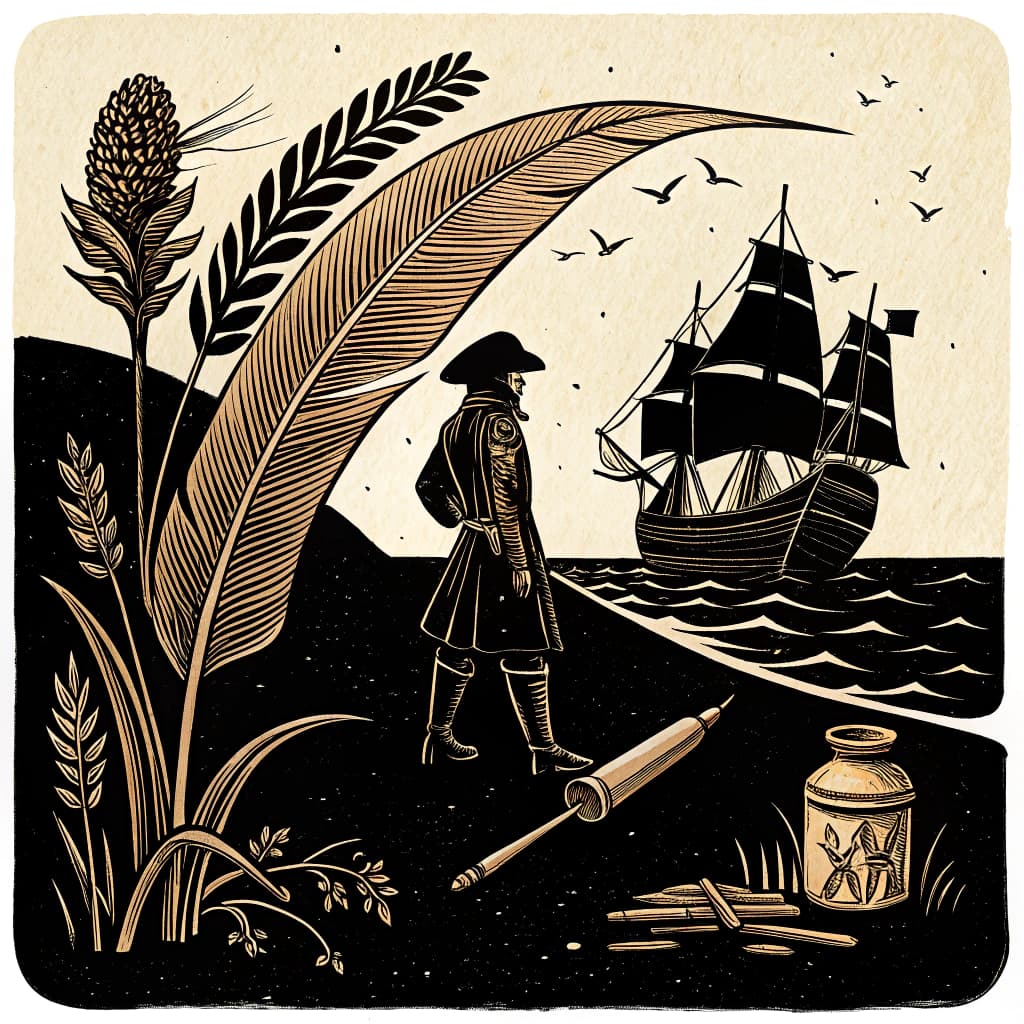
The Columbian Exchange: Global Impact
Investigate the profound movement of plants, animals, diseases, and cultures between the Old and New Worlds.
TL;DR:Active learning helps fifth graders grasp the global scale and human impact of the Columbian Exchange by making abstract exchanges concrete and memorable. When students physically sort, map, and role-play, they connect distant places and consequences to their own lives through familiar foods and animals.
About This Topic
The Columbian Exchange names the vast transfer of plants, animals, diseases, and cultures between the Americas and Afro-Eurasia after 1492. Fifth graders trace New World exports like corn, potatoes, tomatoes, and chocolate, which enriched European and African diets and supported population growth. Old World imports such as horses, cattle, pigs, wheat, and smallpox reshaped American landscapes and societies, with diseases causing 90 percent population declines among Native peoples.
This topic centers the Age of Exploration unit, building skills in cause-and-effect reasoning, geographic connections, and evaluating multiple perspectives, per C3 standards. Students use maps, timelines, and population charts to analyze how exchanges spurred economic changes, cultural blending, and demographic shifts that echo today in global cuisines and agriculture.
Active learning suits this topic well. Sorting cards by impacts, mapping trade routes with yarn, or debating group benefits makes distant events immediate and debatable. These methods spark lively discussions, deepen empathy for affected peoples, and solidify understanding of complex historical processes.
Key Questions
- Explain the positive and negative consequences of the Columbian Exchange.
- Analyze how new foods from the Americas transformed European and African diets.
- Predict the long-term demographic changes caused by the spread of diseases.
Learning Objectives
- Analyze the positive and negative impacts of the Columbian Exchange on both the Old World and the New World.
- Compare the dietary changes in Europe and Africa resulting from the introduction of New World crops.
- Evaluate the long-term demographic consequences of disease transmission during the Columbian Exchange.
- Identify specific plants and animals that were exchanged between the Americas and Afro-Eurasia and classify their origin.
- Explain how the Columbian Exchange facilitated cultural diffusion between continents.
Before You Start
Why: Students need a basic understanding of global geography to comprehend the movement of goods and people between continents.
Why: Understanding the voyages of explorers like Columbus provides the context for the initiation of the Columbian Exchange.
Key Vocabulary
| Columbian Exchange | The widespread transfer of plants, animals, culture, human populations, technology, diseases, and ideas between the Americas, West Africa, and the Old World in the 15th and 16th centuries. |
| Old World | The regions of the world known to Europeans before the Age of Exploration, primarily Europe, Asia, and Africa. |
| New World | The Americas, including North and South America, as they were known to Europeans after Christopher Columbus's voyages. |
| Epidemic | A widespread occurrence of an infectious disease in a community at a particular time, often with devastating effects. |
| Domesticated | Plants or animals that have been adapted for human use through selective breeding over many generations. |
Watch Out for These Misconceptions
Common MisconceptionThe Columbian Exchange brought only benefits to everyone.
What to Teach Instead
New foods aided European growth, but diseases wiped out Native millions and sparked slave trades. Sorting activities reveal uneven effects, while role plays build empathy for varied viewpoints through peer explanations.
Common MisconceptionExchanges happened only between Europe and Americas.
What to Teach Instead
Items reached Africa and Asia too, like maize transforming African farming. Mapping exercises with global arrows show full scope, helping students connect local foods to worldwide webs.
Common MisconceptionDiseases spread because explorers wanted to kill Natives.
What to Teach Instead
Lack of immunity caused unintentional die-offs. Simulations of accidental pathogen travel clarify biology over intent, with discussions reinforcing evidence-based historical thinking.
Active Learning Ideas
See all activities→Simulation Game
Card Sort: Exchange Impacts
Prepare cards listing exchange items like potatoes, horses, and smallpox. Small groups sort them into 'positive' and 'negative' categories, then justify choices with evidence from readings. Share one insight per group with the class.
Simulation Game
Map Activity: Tracing Movements
Give pairs world maps and colored arrows. They label origins and destinations for five key items, note one impact per route. Pairs present routes to rotate and learn from peers.
Jigsaw
Stakeholder Views
Assign roles like European farmer, Native leader, African trader. In expert groups, research impacts, then jigsaw to mixed groups to teach others. Groups create a shared T-chart of views.
Real-World Connections
- Modern diets worldwide are shaped by the Columbian Exchange; for example, pizza, a popular Italian dish, relies heavily on tomatoes, a crop originating in the Americas.
- Agricultural scientists study historical crop exchanges to understand how introducing new varieties can improve yields and resilience in different climates, impacting food security globally.
- Public health officials track the spread of infectious diseases, a concept directly relevant to understanding the devastating impact of Old World diseases on Native American populations.
Assessment Ideas
Provide students with a T-chart labeled 'Positive Impacts' and 'Negative Impacts.' Ask them to list two items exchanged during the Columbian Exchange and describe one positive and one negative consequence for each.
Pose the question: 'If you could travel back in time to 1500, would you want to be in Europe or the Americas, and why, considering the Columbian Exchange?' Facilitate a class discussion where students support their choices with evidence about food, disease, and animals.
Show students images of common foods like potatoes, corn, wheat, and sugar. Ask them to write down the continent of origin for each and whether it represents an import to or export from the Americas during the Columbian Exchange.
Frequently Asked Questions
What were the positive and negative effects of the Columbian Exchange?
How did new foods from the Americas change diets in Europe and Africa?
Why did Native American populations decline after European contact?
How does active learning help teach the Columbian Exchange?
Planning templates for Early American History
5E Model
The 5E Model structures lessons through five phases (Engage, Explore, Explain, Elaborate, and Evaluate), guiding students from curiosity to deep understanding through inquiry-based learning.
Unit PlannerThematic Unit
Organize a multi-week unit around a central theme or essential question that cuts across topics, texts, and disciplines, helping students see connections and build deeper understanding.
RubricSingle-Point Rubric
Build a single-point rubric that defines only the "meets standard" level, leaving space for teachers to document what exceeded and what fell short. Simple to create, easy for students to understand.
More in Age of Exploration
European Motives for Exploration
Analyze the 'Gold, God, and Glory' motivations behind European voyages and the role of new maritime technology.
8 methodologies
Key Explorers & Their Journeys
Trace the routes and discoveries of prominent explorers like Columbus, Magellan, and Da Gama.
8 methodologies
Spanish Conquests & Colonial Systems
Examine the arrival of Conquistadors, the fall of the Aztec and Inca empires, and the establishment of the encomienda system.
8 methodologies
European Rivals in North America
Compare the early settlement and trade strategies of the French, Dutch, and English in North America.
8 methodologies