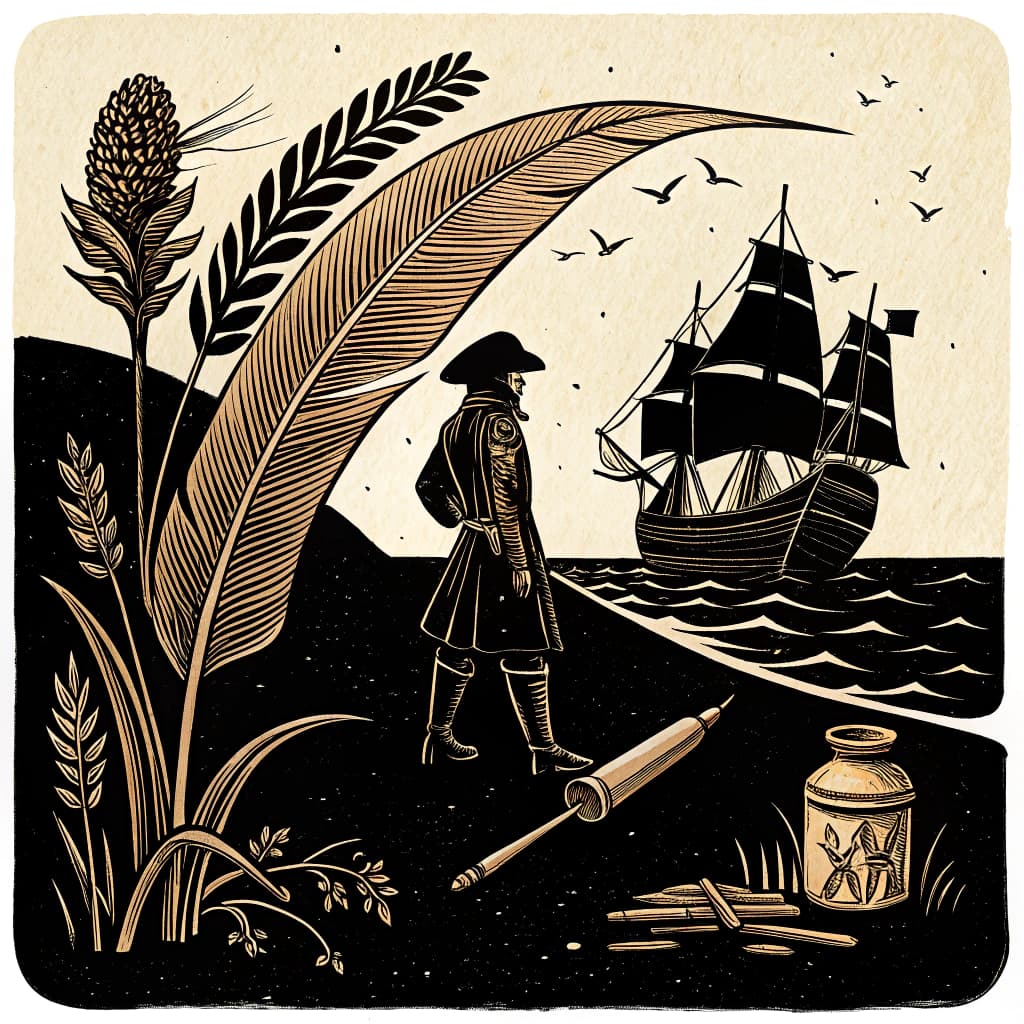
First Contact: Perspectives & Consequences
Examine the initial encounters between Indigenous peoples and Europeans, focusing on differing viewpoints and immediate impacts.
TL;DR:Students need to move beyond memorizing names and dates to truly grasp the complexity of first contact. Active learning forces them to weigh evidence, test assumptions, and practice perspective-taking, which builds the historical empathy required to understand this pivotal era.
About This Topic
The period of first contact between Europeans and Indigenous peoples is one of the most consequential chapters in world history, and teaching it well requires students to hold multiple perspectives simultaneously. For European explorers and monarchs, the Americas represented opportunity: land, wealth, and religious conversion. For the Indigenous peoples who encountered these newcomers, the arrivals ranged from curiosity to trade opportunity to existential threat, depending on the specific context and timing of each encounter.
The immediate consequences of contact were profound and extended well beyond military conflict. European diseases including smallpox, measles, and influenza swept through Indigenous populations that had no prior exposure and therefore no immune defenses, killing an estimated 50 to 90 percent of some communities within decades. The introduction of new animals, plants, and technologies moved in both directions across what historians call the Columbian Exchange, reshaping agriculture and diets on both sides of the Atlantic.
This topic works best with structured perspective-taking activities that require students to articulate viewpoints they may not personally hold and to distinguish carefully between intent and consequence. Primary source analysis, debate formats, and structured academic controversy give students tools to engage with this complexity honestly.
Key Questions
- Compare the European and Indigenous perspectives on 'discovery' and land ownership.
- Analyze the immediate consequences of the introduction of new goods and diseases.
- Predict the long-term effects of these initial encounters on both cultures.
Learning Objectives
- Compare the motivations and expectations of European explorers and Indigenous peoples during initial encounters.
- Analyze the immediate consequences of the Columbian Exchange, including the impact of new goods and diseases on both populations.
- Explain the differing concepts of land ownership and 'discovery' from European and Indigenous perspectives.
- Evaluate the short-term effects of the introduction of European technologies and animals on Indigenous societies.
Before You Start
Why: Students need a foundational understanding of the diverse societies, economies, and ways of life of Indigenous peoples prior to the arrival of Europeans.
Why: Students should have a basic grasp of why European nations were exploring and colonizing new territories in the 15th and 16th centuries.
Key Vocabulary
| Columbian Exchange | The widespread transfer of plants, animals, culture, human populations, technology, diseases, and ideas between the Americas, West Africa, and the Old World in the 15th and 16th centuries. |
| Epidemic | A widespread occurrence of an infectious disease in a community at a particular time, often with devastating effects on populations with no prior immunity. |
| Indigenous Peoples | The original inhabitants of a land, who have distinct cultures, languages, and traditions that predate the arrival of colonizers. |
| Perspective | A particular attitude toward or way of regarding something; a point of view, which can differ greatly between individuals or groups based on their experiences and beliefs. |
| Sovereignty | The authority of a state to govern itself or another state; for Indigenous nations, this refers to their inherent right to self-governance and control over their lands and peoples. |
Watch Out for These Misconceptions
Common MisconceptionColumbus discovered America.
What to Teach Instead
The Americas were home to tens of millions of people before Columbus arrived. Norse explorer Leif Erikson had also reached North America around 1000 CE. Columbus's voyages mattered because they initiated sustained contact between two hemispheres that had developed independently for thousands of years. Analyzing primary source word choices such as 'discovery' versus 'encounter' helps students see how language reflects perspective and power.
Common MisconceptionThe devastation of Indigenous populations was inevitable.
What to Teach Instead
Disease spread was catastrophic because Indigenous peoples had no prior exposure, not because of any inherent vulnerability. Deliberate policies of enslavement, displacement, and violence compounded the demographic collapse significantly. Separating biological causation from deliberate human policy choices is an important analytical skill that primary source comparisons can help develop.
Common MisconceptionThe Columbian Exchange only benefited Europeans.
What to Teach Instead
Many foods now central to European and global cuisines, including potatoes, tomatoes, corn, and chocolate, originated in the Americas. The exchange moved biological material in both directions. However, the exchange was deeply unequal in terms of political and military power. A web-mapping activity helps students see the complexity of what was exchanged while also tracking who controlled the terms of those exchanges.
Active Learning Ideas
See all activities→Structured Academic Controversy
Discovery or Encounter?
Pairs research one perspective (European 'discovery' framing vs. Indigenous 'encounter' framing) using provided primary source excerpts, then present it to another pair with the opposite assignment. After both sides present, groups work toward a consensus statement about the most historically accurate way to frame the events of 1492.
Role Play
Primary Source Analysis: Two Voices
Students read side-by-side accounts: a European explorer's journal entry describing a first meeting, and an Indigenous oral or written account of a similar type of encounter. Using a structured annotation guide, they identify what each source emphasizes, what each omits, and what questions each raises that the other does not address.
Role Play
Columbian Exchange Web
Each student receives a card naming one exchanged item (tomato, horse, smallpox, corn, cattle, potato, tobacco). Students physically connect their cards with yarn to show movement between continents, then discuss which exchanges had positive consequences for which populations, which were harmful, and who controlled the terms of exchange.
Real-World Connections
- Museum curators at institutions like the Smithsonian National Museum of Natural History analyze artifacts from early encounters to understand the material culture and daily lives of both Indigenous peoples and early European settlers.
- Public health officials today still track the spread of infectious diseases and study historical patterns of epidemics, such as those that devastated early American populations, to inform current pandemic preparedness.
- Land use planners and policymakers often grapple with historical land claims and differing concepts of ownership, drawing on the legacy of early European colonization and its impact on Indigenous territories.
Assessment Ideas
Pose the question: 'Imagine you are an Indigenous person witnessing the arrival of a European ship for the first time. What are your immediate thoughts and concerns?' Then ask: 'Now, imagine you are a European explorer arriving on unfamiliar shores. What are your primary goals and assumptions?' Facilitate a class discussion comparing these initial reactions.
Provide students with two scenarios: one describing the introduction of a new European good (like metal tools) to an Indigenous community, and another describing the spread of a European disease. Ask students to write one sentence explaining a positive immediate consequence and one sentence explaining a negative immediate consequence for each scenario.
Present students with two short, simplified quotes, one reflecting a European view of land ownership and one reflecting an Indigenous view. Ask students to identify which quote represents which perspective and explain one key difference in their understanding of land.
Frequently Asked Questions
What does 'first contact' mean in history?
Why did so many Indigenous people die after Europeans arrived?
What was the Columbian Exchange?
How does active learning help students study first contact fairly?
Planning templates for Early American History
5E Model
The 5E Model structures lessons through five phases (Engage, Explore, Explain, Elaborate, and Evaluate), guiding students from curiosity to deep understanding through inquiry-based learning.
Unit PlannerThematic Unit
Organize a multi-week unit around a central theme or essential question that cuts across topics, texts, and disciplines, helping students see connections and build deeper understanding.
RubricSingle-Point Rubric
Build a single-point rubric that defines only the "meets standard" level, leaving space for teachers to document what exceeded and what fell short. Simple to create, easy for students to understand.
More in Indigenous Americas
Ancient Migrations & Early Settlements
Explore the theories of early human migration to the Americas and the development of hunter-gatherer societies.
8 methodologies
Maya Civilization: Cities & Innovations
Investigate the advanced urban planning, writing systems, and astronomical achievements of the Maya.
8 methodologies
Aztec Empire: Power & Culture
Examine the rise of the Aztec Empire, its social structure, religious practices, and engineering feats like Tenochtitlan.
8 methodologies
Inca Empire: Engineering & Administration
Study the vast Inca road system, advanced agricultural techniques, and centralized government in the Andes.
8 methodologies
North American Indigenous Diversity
Explore the varied cultures and adaptations of Indigenous nations across different North American regions.
8 methodologies
Indigenous Governance & Oral Traditions
Investigate complex governmental structures like the Iroquois Confederacy and the role of oral history.
8 methodologies