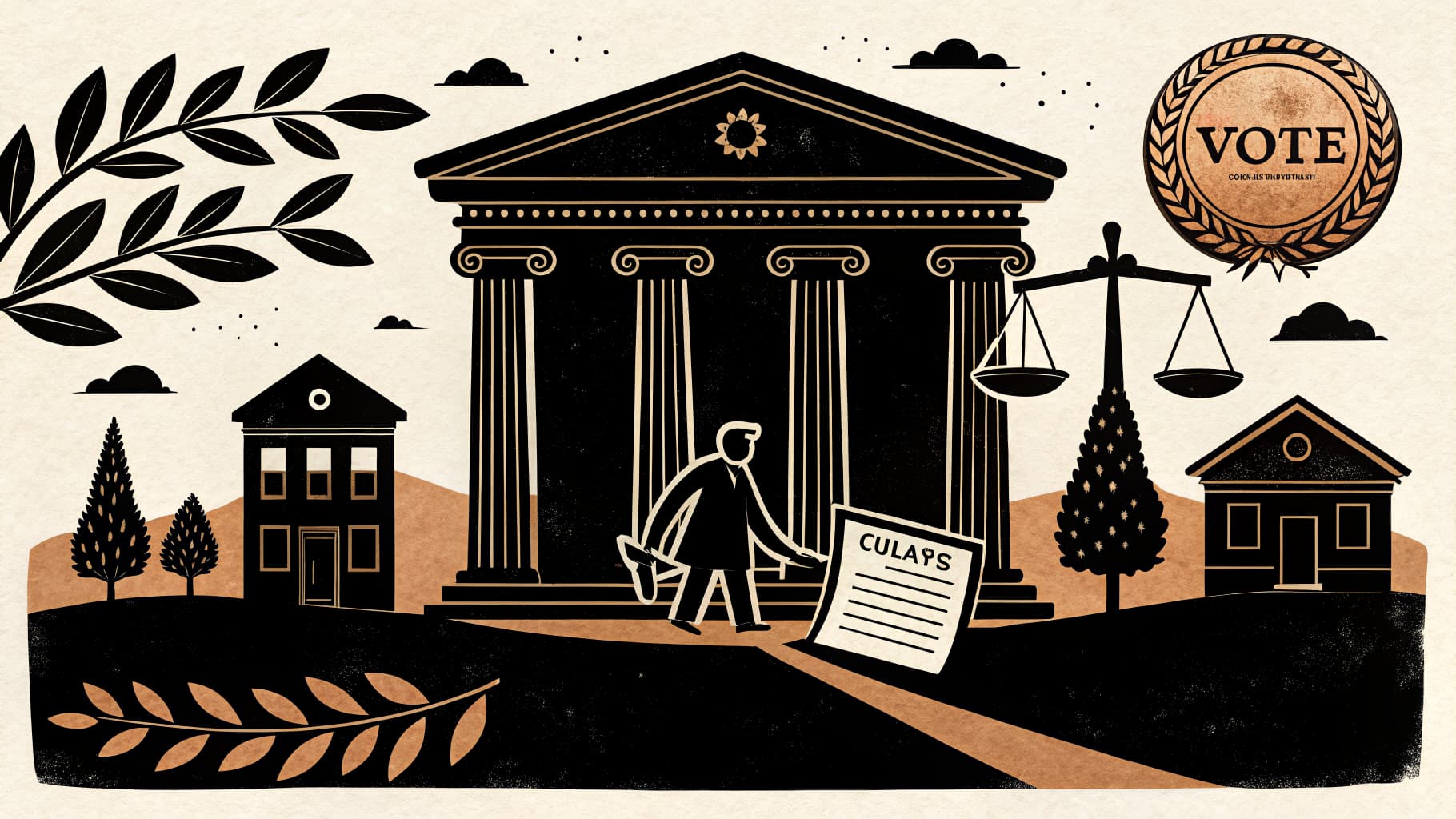
Voter Suppression and Access
Debating the ethics and legality of voting requirements like ID laws and mail-in ballots.
TL;DR:This topic lends itself to active learning because it demands students examine conflicting values and complex evidence rather than memorizing facts. Talking about voter suppression and access requires students to weigh competing democratic priorities and grapple with real-world consequences, which active strategies like debates and case studies make possible.
About This Topic
Debates over voting requirements sit at the intersection of two legitimate democratic values: election integrity, meaning that only eligible voters cast valid ballots, and voter access, meaning that all eligible citizens can exercise their right to vote without undue burden. These values are both genuine, and different states have made different choices about how to balance them. The result is a patchwork of laws governing voter ID requirements, registration deadlines, polling place locations, early voting windows, and absentee ballot procedures.
The historical context is essential for understanding these debates. The Fifteenth Amendment (1870) formally prohibited denying the vote on racial grounds, but states used literacy tests, poll taxes, grandfather clauses, and outright intimidation to prevent Black citizens from voting for nearly another century. The Voting Rights Act of 1965 addressed many of these practices, but the Supreme Court's Shelby County v. Holder (2013) ruling significantly limited federal oversight of state voting laws. Understanding that history helps students analyze whether modern voting regulations are legitimate security measures or updates on older exclusionary patterns.
Active learning is especially valuable here because students arrive with strong prior opinions. Structured controversy and evidence-based analysis help them test assumptions against data rather than simply rehearsing their starting position.
Key Questions
- Analyze the balance between election security and voter access.
- Explain how historical barriers to voting have evolved into modern debates.
- Justify whether voting should be mandatory in the United States.
Learning Objectives
- Analyze the historical evolution of voting barriers in the US, from poll taxes to modern ID laws.
- Evaluate the arguments for and against specific voting requirements, such as voter ID laws and mail-in ballots, based on evidence of election security and voter access.
- Compare and contrast the voting laws of at least two different US states, identifying the underlying principles guiding their balance of election security and voter access.
- Formulate a reasoned argument, supported by evidence, on whether voting should be mandatory in the United States.
Before You Start
Why: Students need a basic understanding of democratic principles, citizenship, and the right to vote before analyzing debates over voting requirements.
Why: Knowledge of amendments related to voting rights, such as the 15th and 19th Amendments, is crucial for understanding the historical context of voter access.
Key Vocabulary
| Voter ID Laws | State regulations requiring voters to present identification, such as a driver's license or passport, at the polling place. |
| Mail-in Ballots | Ballots that voters can receive through the mail, complete at home, and return via mail or drop box, often used for absentee voting. |
| Voter Access | The ease with which eligible citizens can register to vote and cast their ballot without encountering unnecessary obstacles or burdens. |
| Election Security | Measures and procedures designed to ensure the integrity of elections, prevent fraud, and maintain public confidence in the outcome. |
| Disenfranchisement | The revocation or denial of the right to vote to a person or group, often through legal or extralegal means. |
Watch Out for These Misconceptions
Common MisconceptionVoter fraud is widespread in the United States.
What to Teach Instead
Multiple independent investigations, court challenges, and academic studies have found that verifiable in-person voter fraud is extremely rare -- estimates range from 0.00004% to 0.0025% of ballots cast. The frequency of documented fraud is relevant evidence for evaluating whether strict ID requirements solve a proportionate problem, and students should be able to cite this evidence rather than accepting either partisan claim.
Common MisconceptionVoter ID laws are straightforward common sense with no downside.
What to Teach Instead
A significant minority of eligible citizens -- disproportionately elderly, low-income, and non-white voters -- do not possess the specific forms of ID required by many state laws. Whether that burden is a small practical inconvenience or a structural barrier to access is a genuine policy question that requires examining evidence about who lacks qualifying ID and how difficult it is to obtain.
Common MisconceptionThe Voting Rights Act permanently solved voting discrimination.
What to Teach Instead
The VRA (1965) required federal preclearance for voting law changes in states with a history of discrimination. The Supreme Court's Shelby County v. Holder (2013) ruling effectively ended preclearance by invalidating the coverage formula. New voting laws in formerly covered states no longer require federal approval before taking effect, which is why post-2013 state voting laws are frequently contested in federal court.
Active Learning Ideas
See all activities→Structured Academic Controversy
Does Voter ID Suppress Votes?
Using research on voter ID laws' effects on turnout disaggregated by race, income, and party registration, pairs build the strongest case for each side before working toward a nuanced synthesis. The explicit emphasis is on evidence quality rather than partisan position. Students must cite specific studies and explain why they find one body of evidence more persuasive.
Case Study Analysis
Voting Restriction Timeline
Students examine a timeline of voting expansion and restriction from Reconstruction through the present. Small groups analyze three specific laws or court decisions, identifying who was targeted, what the stated rationale was, and what the measurable effect was on turnout or registration. Groups then identify recurring patterns and present their findings to the class.
Fishbowl Discussion
Should Voting Be Mandatory?
An inner circle debates the compulsory voting proposal, drawing on examples from Australia and Belgium. The outer circle tracks the strongest arguments and identifies which democratic values underlie each position, then rotates in. Debrief focuses on whether mandatory voting addresses the right problem or creates new ones.
Real-World Connections
- Election officials in states like Texas and Arizona regularly debate and implement voter ID requirements, citing election integrity as a primary concern. These debates often involve legal challenges from civil rights organizations arguing about voter access.
- The U.S. Postal Service plays a critical role in the administration of mail-in voting, with decisions about delivery times and ballot tracking directly impacting voters in states like Colorado and Oregon, which have universal mail-in voting.
- Attorneys specializing in election law frequently litigate cases concerning voter access and election security, such as challenges to voter registration deadlines or polling place closures, impacting upcoming elections in swing states like Pennsylvania and Wisconsin.
Assessment Ideas
Pose the following question to small groups: 'Is a strict voter ID law a necessary measure for election security, or an undue burden on voter access? Have each group identify two arguments supporting their stance and one counter-argument they must address. Facilitate a class debate where groups present their findings.'
Provide students with short case studies of different state voting laws (e.g., Georgia's voter ID law, California's mail-in ballot system). Ask them to write one sentence identifying the primary tension (security vs. access) in each case and one specific consequence for voters.
Ask students to write a brief paragraph answering: 'How has the historical struggle for voting rights in the US informed current debates about voter suppression and access?' Require them to include at least one specific historical example and one modern voting regulation.
Frequently Asked Questions
What is voter suppression and how is it different from legitimate election administration?
What did the Voting Rights Act of 1965 do, and is it still in full effect?
How do other countries handle voter registration and access compared to the US?
Why does active learning help students engage with voter suppression debates in a productive way?
Planning templates for Civics & Government
More in Political Parties and Ideology
The Political Spectrum
Defining liberalism, conservatism, libertarianism, and other major ideological frameworks.
8 methodologies
The Two-Party System
Investigating why the U.S. is dominated by two parties and the challenges faced by third parties.
8 methodologies
Political Socialization
Examining how family, media, and education shape an individual's political beliefs.
8 methodologies
Media Bias and Information Literacy
Developing skills to identify bias and evaluate sources in political reporting.
8 methodologies
Party Platforms and Conventions
Analyzing how parties formalize their goals and build coalitions during election cycles.
8 methodologies
Polarization and Partisanship
Exploring the causes and consequences of increasing political division in the U.S.
8 methodologies