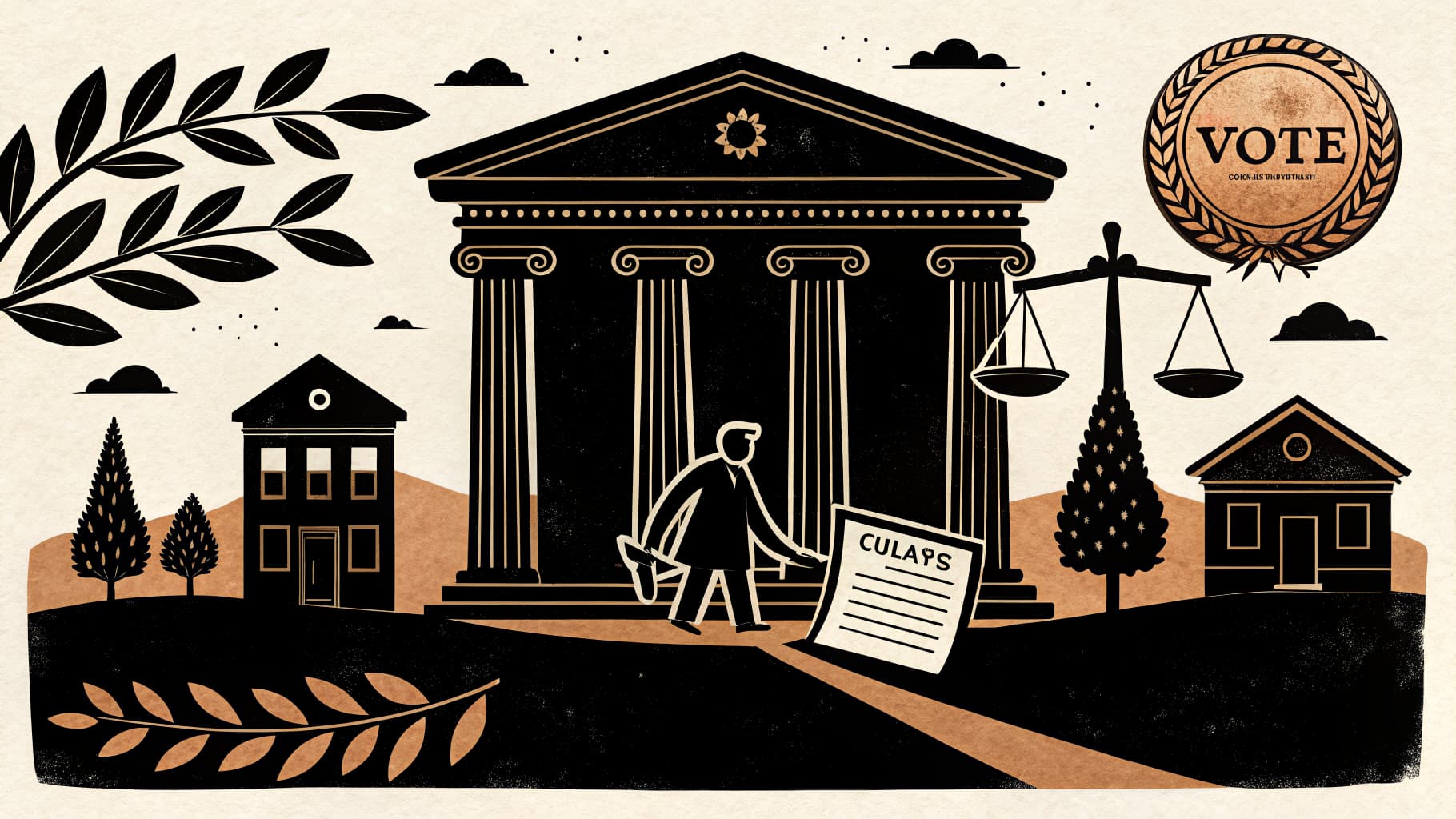
Citizen Participation in Policy Making
Exploring avenues for citizens to influence public policy beyond voting.
TL;DR:Active learning works for this topic because citizen participation in policy making is not theoretical, it is concrete, local, and often happens through direct interaction with decision-makers. When students practice crafting messages to officials, drafting public comments, or organizing advocacy plans, they see how civic tools translate into real influence, not just abstract rights.
About This Topic
Voting is the most visible form of civic participation, but it is far from the only one. Students examine the full range of mechanisms through which citizens influence public policy: contacting elected officials, participating in public comment processes, joining advocacy organizations, engaging in peaceful protest, running for office, using litigation as a policy tool, and participating in local governance structures like school boards and planning commissions.
Research on civic engagement shows significant variation by income, education, age, and race, raising questions about whose voice is heard in the policy process and whether formal participatory mechanisms function equally for all citizens. Students examine these patterns and consider what structural factors might explain them, moving beyond individual explanations to systemic analysis.
Active learning is central to this topic by design: students who practice civic participation in the classroom, whether through structured deliberation, contacting officials, or designing advocacy campaigns, develop the skills and confidence for participation in real civic life. The C3 framework's Action Civics strand explicitly calls for this kind of authentic civic practice.
Key Questions
- Analyze various methods citizens use to influence public policy.
- Evaluate the effectiveness of different forms of civic engagement.
- Design a plan for citizens to advocate for a specific policy change.
Learning Objectives
- Analyze the various methods citizens employ to influence public policy, distinguishing between direct and indirect forms of participation.
- Evaluate the relative effectiveness of different civic engagement strategies, such as lobbying, protesting, and public comment, in achieving policy goals.
- Design a comprehensive advocacy plan for a specific policy issue, outlining target audiences, communication methods, and desired outcomes.
- Compare the influence of organized interest groups versus individual citizens in the policy-making process.
- Critique the equity of access and impact for diverse demographic groups within current policy-making participation structures.
Before You Start
Why: Students need a foundational understanding of how the different branches of government operate to comprehend where and how citizen influence is most effective.
Why: Understanding the rights and responsibilities associated with being a US citizen provides the context for why and how citizens are expected to participate in policy-making.
Key Vocabulary
| Lobbying | The act of attempting to influence decisions made by officials in a government, most often legislators or members of regulatory agencies. This can be done by individuals or organized groups. |
| Public Comment Period | A formal opportunity for the public to provide input on proposed regulations or policies before they are finalized. This is a common process in administrative rule-making. |
| Advocacy Organization | A group that works to influence public opinion and government policy on a specific issue or set of issues, often through research, public awareness campaigns, and direct lobbying. |
| Grassroots Mobilization | Organizing ordinary people at the local level to take action on a political issue, often involving direct citizen engagement and collective action. |
| Civic Discourse | The open exchange of ideas and opinions about civic matters and public policy. It involves respectful dialogue and consideration of diverse perspectives. |
Watch Out for These Misconceptions
Common MisconceptionIndividual citizens cannot meaningfully influence policy.
What to Teach Instead
Research on legislative responsiveness shows that constituent contacts, especially personal calls and letters rather than form emails, do influence staff attention and sometimes votes, particularly at the local and state level. Students who complete action civics projects with real targets often discover that officials respond to specific, well-researched asks from constituents.
Common MisconceptionProtest and advocacy are less legitimate forms of participation than voting.
What to Teach Instead
The First Amendment explicitly protects petitioning the government and peaceful assembly. Many major policy changes, from civil rights legislation to environmental regulation, were driven by sustained advocacy and organized pressure outside electoral politics. Students examining the history of policy change quickly see that multiple participatory channels have shaped US law.
Active Learning Ideas
See all activities→Service Learning
Action Civics Project: Local Policy Advocacy
Students identify a local policy issue, research its background and relevant decision-makers, and develop an advocacy strategy with a specific ask directed at a real official or body. They draft and send actual communications (letters, emails, public comments) and report back on any responses received, treating the real civic system as the learning environment.
Simulation Game
Public Comment Hearing
Students role-play a public comment period for a proposed local regulation. Half the class represents different affected stakeholder groups preparing two-minute comments; the other half plays the regulatory board, taking notes and asking follow-up questions. Groups then switch roles for a second scenario.
Think-Pair-Share
Who Participates and Why?
Students examine data on civic participation rates broken down by age, income, race, and education. Working with a partner, they develop hypotheses about the structural and individual factors that explain the patterns, then share with the class and evaluate which explanations best fit the evidence.
Real-World Connections
- Citizens in Flint, Michigan, organized and advocated for years to address the lead contamination in their water supply, utilizing community meetings, legal action, and media engagement to pressure state and federal officials.
- The Sierra Club, a national environmental advocacy organization, regularly submits public comments on proposed EPA regulations and lobbies Congress on climate change legislation, demonstrating organized citizen influence.
- Local school board meetings across the country provide a direct forum for parents and community members to voice concerns and influence educational policy, from curriculum changes to budget allocations.
Assessment Ideas
Pose the following question to students: 'Imagine a new factory is proposed for your town that could bring jobs but also pollution. Which three methods of citizen participation would you prioritize to influence the town council's decision, and why?' Facilitate a class discussion where students justify their choices based on potential effectiveness and feasibility.
Provide students with a short case study describing a current policy debate (e.g., a proposed zoning change, a new local ordinance). Ask them to identify two specific actions citizens could take to influence the outcome and one potential challenge they might face in taking those actions.
On an index card, have students write down one policy issue they care about. Then, ask them to list one specific organization or group that advocates for or against that issue, and one concrete step they could take, even if small, to support their preferred side.
Frequently Asked Questions
What is the difference between lobbying and grassroots advocacy?
How do public comment periods work in the rulemaking process?
What forms of civic engagement are most effective at influencing policy?
How does active learning prepare students for actual civic participation?
Planning templates for Civics & Government
More in The Legislative Branch and Public Policy
Structure and Powers of Congress
An overview of the bicameral legislature and its constitutional authority.
8 methodologies
Representation and Districting
Exploring how congressional districts are drawn and the impact on political voice.
8 methodologies
The Legislative Process: How a Bill Becomes Law
Tracing the journey of a bill through committees, floor debate, and presidential action.
8 methodologies
The Committee System and Interest Groups
Analyzing the influence of specialized committees and lobbyists on the lawmaking process.
8 methodologies
Congressional Oversight and Investigations
Examining Congress's role in monitoring the executive branch and conducting investigations.
8 methodologies
The Budgetary Process
Evaluating how the government prioritizes spending and the ethics of fiscal policy.
8 methodologies