Sources of Knowledge
Investigate rationalism and empiricism as foundational approaches to acquiring knowledge.
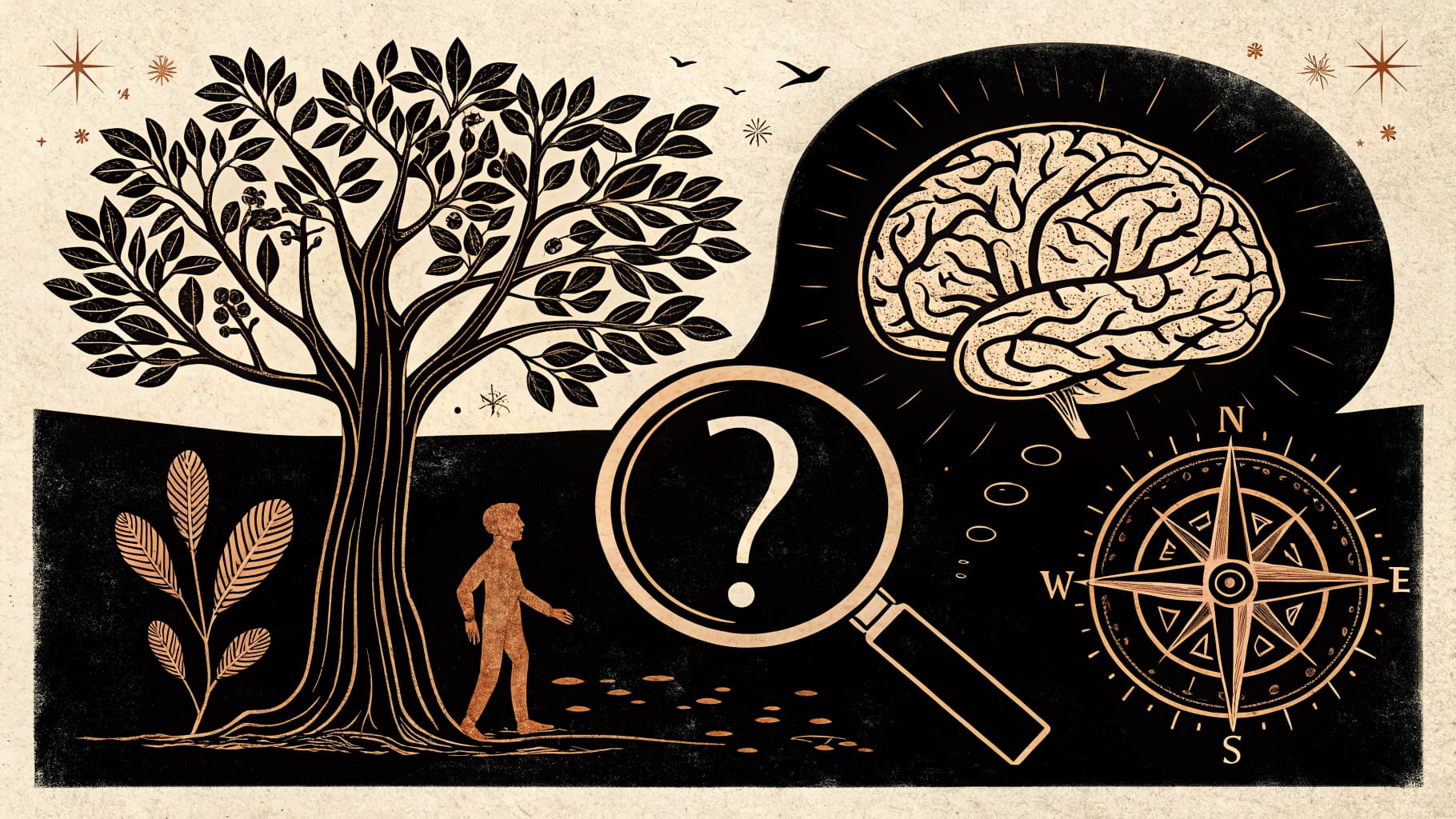
TL;DR:This topic explores the two primary 'camps' in the history of epistemology: Rationalism and Empiricism. Students investigate whether our knowledge is primarily derived from sensory experience (Empiricism) or if the mind possesses innate ideas and the power of reason to reach truth independently of the senses (Rationalism). This connects directly to the syllabus requirements regarding the sources and justification of knowledge.
About This Topic
This topic explores the two primary 'camps' in the history of epistemology: Rationalism and Empiricism. Students investigate whether our knowledge is primarily derived from sensory experience (Empiricism) or if the mind possesses innate ideas and the power of reason to reach truth independently of the senses (Rationalism). This connects directly to the syllabus requirements regarding the sources and justification of knowledge.
In a Singaporean educational landscape that often emphasizes empirical data in science and geography, this unit provides a necessary balance by introducing the power of a priori reasoning. Students learn to question the reliability of their senses and the limits of pure logic. Students grasp this concept faster through structured discussion and peer explanation where they can pit 'reason' against 'experience' in real-world scenarios.
Key Questions
- Is all knowledge derived from experience?
- What role does reason play in understanding the world?
- How do our senses deceive us?
Watch Out for These Misconceptions
Common MisconceptionEmpiricists do not use logic or reason.
What to Teach Instead
Empiricists use reason to process data, but they believe the *content* of knowledge must come from the senses first. Collaborative investigations into scientific methods can help students see how the two work together.
Common MisconceptionRationalism is just 'making things up' without evidence.
What to Teach Instead
Rationalism relies on rigorous, logical proof (like in mathematics). Using peer teaching to explain a geometric proof can show students how certain truths are reached without needing to 'see' every instance in the world.
Active Learning Ideas
See all activities→Stations Rotation
The Senses vs. The Mind
Set up stations with optical illusions (Empiricist challenge) and logic puzzles (Rationalist strength). Students rotate through, documenting when they trust their eyes versus when they trust their logic.
Role Play
Descartes vs. Locke
Pairs of students take on the personas of a famous Rationalist and Empiricist. They must argue how a child learns the concept of a 'triangle' or 'justice' using only their assigned philosopher's framework.
Gallery Walk
Sources of Knowledge in School Subjects
Students create posters showing how different subjects (Math, History, Science) rely on either reason or experience. They walk around and leave 'sticky note' challenges on posters that oversimplify the source.
Frequently Asked Questions
What is the main difference between rationalism and empiricism?
How do these theories apply to modern science?
What are the best hands-on strategies for teaching sources of knowledge?
Can you be both a rationalist and an empiricist?
More in The Foundations of Knowledge
Belief, Truth, and Justification
Examine the traditional tripartite definition of knowledge as justified true belief and explore Gettier problems.
8 methodologies
The Challenge of Skepticism
Analyze skeptical arguments that question the possibility of certain knowledge and evaluate responses to them.
8 methodologies