India · CBSE Learning Outcomes
Class 12 History
Class 12 History: Themes in Indian History. An intensive, source-based study of Indian history from the Harappan civilisation to the framing of the Constitution, exploring archaeological evidence, chronicles, devotional traditions, Mughal courts, colonial transformations, and the birth of the Indian republic.
01Archaeology and Ancient Urbanism
An exploration of the earliest urban cultures and the transition to early historic states through material remains.
The story of how Harappa was discovered and the role of Alexander Cunningham in early Indian archaeology, focusing on initial misinterpretations.
The contributions of John Marshall in systematic excavation and the declaration of the Indus Valley Civilization, contrasting with earlier approaches.
Detailed study of the Citadel, the Lower Town, and the sophisticated drainage systems of Mohenjo-daro, examining their social implications.
Analysis of botanical and zoological remains to understand Harappan diet, farming techniques, and the role of animal domestication.
The manufacture of beads, seals, and weights, and the procurement of materials like lapis lazuli and carnelian, highlighting trade routes and specialized centers.
Examining the nature of the undeciphered script and the function of seals in trade and administration, exploring theories of its linguistic structure.
Debates over the existence of a central authority, kingship, or a priest-king in Harappan society, and the organization of labor.
Theories regarding the decline: climatic change, deforestation, floods, or the Aryan invasion theory, and their supporting evidence.
Introduction to the Vedic period, focusing on social organization, religious practices, and the transition from pastoralism to early agriculture.
The emergence of territorial states (Janapadas), the development of the Varna system, and the increasing complexity of religious rituals.
The impact of iron technology on agriculture and warfare in the Gangetic plains, leading to increased food production and population growth.
02Political and Economic History of Early India
The rise of the Mahajanapadas and the consolidation of the Mauryan Empire.
The emergence of early states and the transition from tribal chiefdoms to territorial kingdoms, focusing on their political and economic characteristics.
Factors contributing to Magadha's rise, including geographical advantages, powerful rulers, and military innovations, leading to the first empires.
The central, provincial, and local governance structures under Chandragupta and Ashoka, including the role of the Arthashastra.
The ethics and propagation of Dhamma through inscriptions and Dhamma Mahamattas, and its political and social implications.
Study of Mauryan artistic achievements, including Ashokan pillars, stupas, and rock-cut caves, and their symbolic and political significance.
The Kushanas and the Guptas: Divine kingship, the use of Prashastis (panegyrics), and the evolution of royal ideology.
The growth of towns like Pataliputra and Mathura, the rise of guilds (shrenis), and the extent of Indo-Roman trade.
The evolution of coinage from punch-marked coins to the gold coins of the Guptas, and their significance as historical evidence.
The practice of land grants (agrahara, brahmadeya) and their impact on agrarian expansion, the emergence of new landholding patterns, and the economy.
Examining the concept of a 'Golden Age' during the Gupta period, considering achievements in science, art, and literature versus social realities.
03Social Histories: Caste, Class, and Gender
An analysis of social structures through the lens of early Sanskrit texts and legal codes.
The monumental project of V.S. Sukthankar and the complexities of textual transmission, highlighting regional variations and didactic elements.
Exploring rules of gotra, exogamy, endogamy, and polygyny/polyandry as depicted in texts like the Mahabharata, and their social functions.
The Brahmanical theory of social order (Varna) and the reality of occupational groups (Jati), and their justification in Dharamshastras.
The concept of Stridhana and the restrictions on women's access to land and resources, examining the impact of patriliny and exceptions like Prabhavati Gupta.
Instances of non-Kshatriya kings and the flexibility of the caste system in practice, including the integration of foreign groups and the role of migration.
The lives of forest dwellers, nomadic pastoralists, and the 'untouchables' as depicted in texts like the Manusmriti, and alternatives like Buddhism.
04Cultural and Religious Developments
The philosophical churn of the mid-first millennium BCE and the evolution of art and architecture.
Speculations on the nature of the soul (Atman) and the ultimate reality (Brahman), and how these ideas challenged Vedic ritualism.
The doctrine of Ahimsa, the five vows, and the spread of Jain philosophy, including its impact on trading communities and sectarian divisions.
The life of Gautama Buddha, the Four Noble Truths, and the Eightfold Path, examining the role of the Sangha and its appeal to diverse groups.
A study of the structure of the Stupa and the narrative art of Sanchi, focusing on its symbolic meaning and patronage.
The shift from the symbolic representation of Buddha to the worship of idols and Bodhisattvas, and the emergence of Mahayana Buddhism.
The rise of Vaishnavism and Shaivism and the construction of the first stone temples, examining the concept of Bhakti and the role of the Puranas.
A comparative study of why Sanchi survived while Amaravati was lost to collectors, highlighting the impact of colonial archaeology.
An introduction to the central philosophical themes of the Bhagavad Gita, focusing on duty (Dharma), action (Karma), and devotion (Bhakti).

05Medieval Society through Travelers' Eyes
Understanding medieval India through the accounts of Al-Biruni, Ibn Battuta, and Francois Bernier.
A scholar's objective analysis of Indian religion, philosophy, and the caste system, focusing on Al-Biruni's methodology and identified 'barriers'.
The Rihla and its descriptions of Indian cities, postal systems, and unique Indian products like the coconut and paan, from a global traveler's perspective.
A French physician's critique of Mughal India and his theory of private property, examining how his accounts influenced European thinkers.
Exploring hidden voices in travelogues and the depiction of women in medieval accounts, including the exoticization of the harem and the practice of Sati.

06Bhakti-Sufi Traditions
The evolution of devotional movements and their impact on Indian social and religious life.
The pioneers of the Bhakti movement in South India and their relationship with the Chola state, focusing on their challenge to established religions.
Basavanna and the Lingayat movement's radical critique of caste and ritual in Karnataka, and the role of Vachanas.
The life at the Khanqah, the practice of Ziyarat, and the Qawwali, exploring how Sufis integrated local Indian traditions.
The syncretic poetry of Kabir and his rejection of religious labels, examining his use of metaphors and his lasting legacy.
The message of Nirguna Bhakti and the institutionalization of the Sikh community, including the compilation of the Adi Granth and the Khalsa.
A Rajput princess who defied patriarchal norms through her devotion to Krishna, exploring her poetry and her remembrance in folk traditions.
07Imperial Capitals and Agrarian Relations
The architectural glory of Vijayanagara and the agrarian systems of the Mughal Empire.
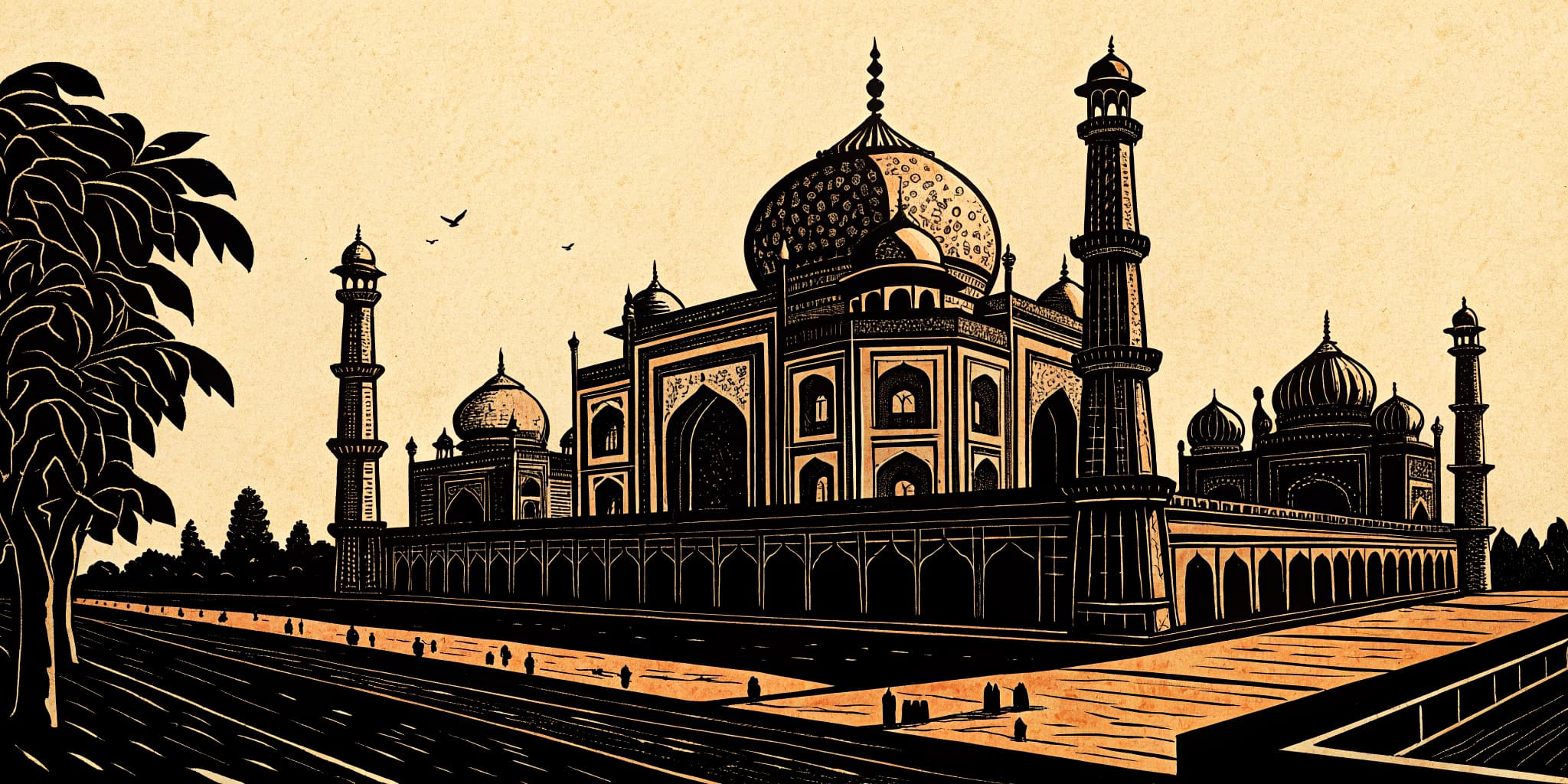
The founding of the empire, the Hampi ruins, and the Raya-Gopurams, focusing on the city's strategic layout and water management.
Distinguishing between the religious and political spaces in Hampi, including the Vitthala and Virupaksha temples and cultural synthesis.
The Ain-i-Akbari as a source for understanding rural life and revenue administration, including land classification and cash crops.
The unique Mughal military-civilian bureaucracy and the Zat and Sawar ranks, examining its evolution and impact on the nobility.
The social organization of the medieval village, the role of the panchayat in dispute resolution, and the 'jajmani' system.
The expansion of agriculture and its impact on the 'Zamin-i-Azad' (free land), and the integration of tribal groups into the Mughal state.
The production of manuscripts and the rituals of the Diwan-i-Aam and Diwan-i-Khas, examining painting as royal propaganda.
Examining Akbar's policy of universal peace and tolerance, its philosophical underpinnings, and its impact on the Mughal state and society.
08Colonialism, Resistance, and the Modern State
From the impact of Company rule to the making of the Indian Constitution.
The British attempt to create a class of loyal landlords and its devastating impact on ryots, including the emergence of Jotedars.
Comparison of the Ryotwari and Mahalwari land revenue systems with the Permanent Settlement, analyzing their varied impacts on different regions and peasant lives.
The resistance of the Santhals against the Dikus (outsiders) and the colonial state, focusing on the causes and leadership of the uprising.
The causes and consequences of the Deccan Riots, focusing on peasant grievances against moneylenders and the British response.
The immediate causes of the revolt and the role of collective belief in mobilizing the masses, including the significance of symbols.
Study of key leaders like Rani Lakshmibai, Nana Saheb, and Begum Hazrat Mahal, and the major centers of the revolt, analyzing their motivations and strategies.
The brutal suppression of the revolt by the British, the shift from Company rule to Crown rule, and the long-term impact on British policy in India.
The development of colonial port cities as centers of trade, administration, and new social hierarchies, focusing on their urban planning and architecture.
Gandhi's return from South Africa and his early experiments with Satyagraha in Champaran and Kheda, and the link with the Khilafat movement.
The strategies and impact of the Non-Cooperation Movement, including boycott of foreign goods, renunciation of titles, and its eventual withdrawal.
The Dandi March as a symbolic challenge to British monopoly, the mobilization of women, and the impact of the Gandhi-Irwin Pact.
The mass uprising of 1942 and the shift towards the demand for total independence, including British suppression and underground activities.
The emergence of communal politics, the role of the Muslim League, and the development of the Two-Nation Theory leading to demands for Pakistan.
The violence of 1947, the displacement of millions, and the trauma of the borders, examining political failures and personal memoirs.
The clash of ideas in the Constituent Assembly regarding federalism and minority rights, and the balancing of a strong center with state rights.
The role of the Drafting Committee Chairman in ensuring social justice within the legal framework, focusing on his personal experiences and vision.