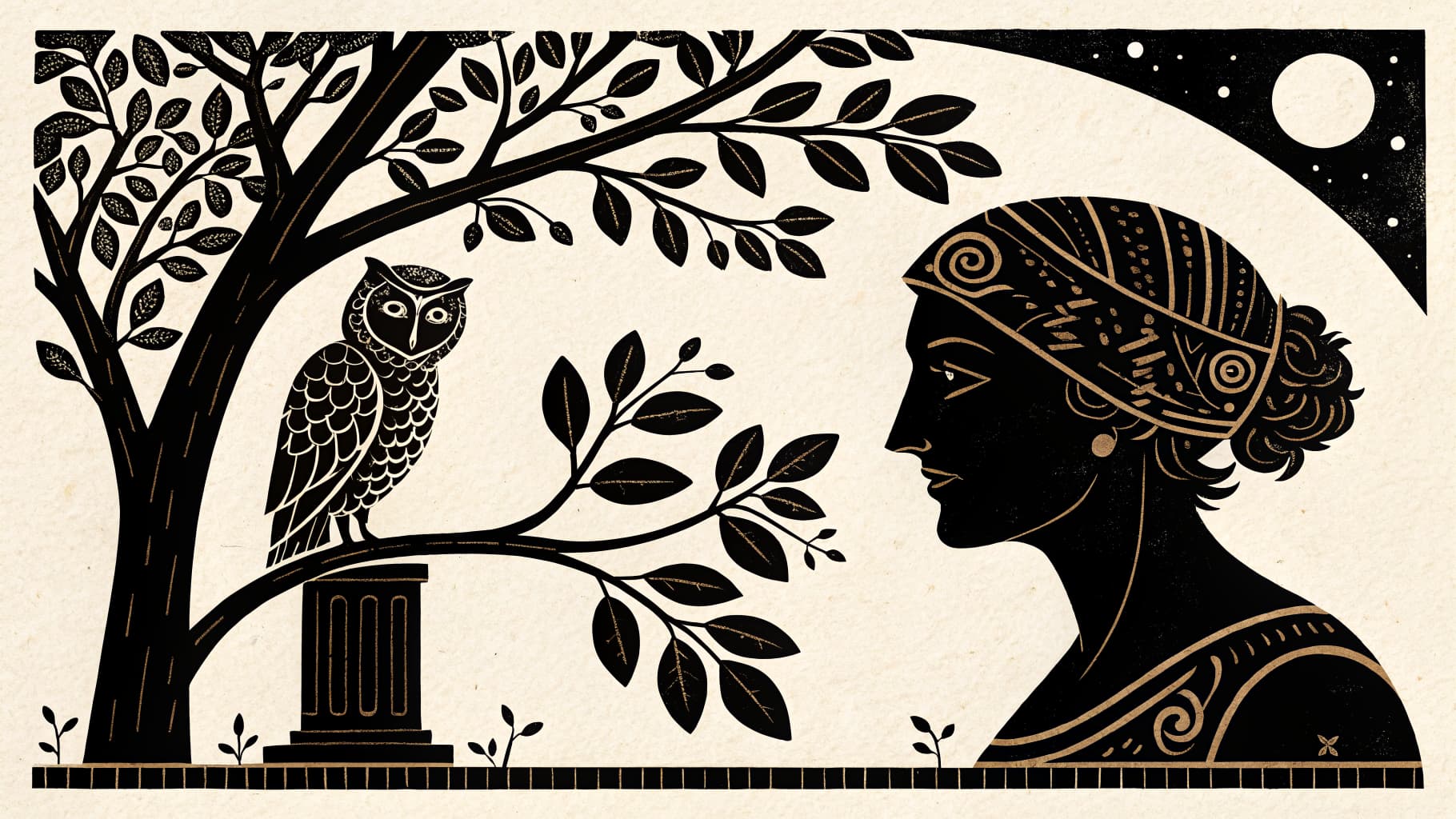
The Nature of Inquiry
Students explore what makes a question philosophical and distinguish between different types of knowledge. They practice the Community of Philosophical Inquiry (CoPI) method to foster collaborative thinking.
TL;DR:This topic introduces students to the transition from mythological explanations to rational inquiry. In the context of the NCCA Philosophy Short Course, it focuses on the 'Big Questions' that humans have asked for millennia. Students learn to identify the specific characteristics of a philosophical question, such as its open-ended nature and its focus on fundamental concepts like existence, truth, and beauty. This foundation helps them distinguish between empirical questions that science can answer and conceptual questions that require reasoning.
About This Topic
This topic introduces students to the transition from mythological explanations to rational inquiry. In the context of the NCCA Philosophy Short Course, it focuses on the 'Big Questions' that humans have asked for millennia. Students learn to identify the specific characteristics of a philosophical question, such as its open-ended nature and its focus on fundamental concepts like existence, truth, and beauty. This foundation helps them distinguish between empirical questions that science can answer and conceptual questions that require reasoning.
Understanding the origins of wonder allows students to connect with the history of human thought, from early Greek thinkers to contemporary Irish philosophers. It encourages a mindset of curiosity and intellectual humility, which are central to the Junior Cycle Key Skills. This topic comes alive when students can physically sort and categorise different types of questions through collaborative movement and peer discussion.
Key Questions
- What makes a question philosophical?
- How do we engage in respectful and productive dialogue?
- Why is philosophy relevant in today's world?
Active Learning Ideas
See all activities→Stations Rotation
Question Sorting
Set up three stations labeled Scientific, Factual, and Philosophical. Small groups move between stations with a set of mixed question cards, debating where each belongs and moving them if they find a more suitable category based on group consensus.
Think-Pair-Share
The First Wonder
Students reflect individually on a moment they felt genuine wonder about the world, share it with a partner to find common themes, and then present one 'unanswerable' question to the class that arose from their experience.
Inquiry Circle
Myth vs. Reason
Groups examine an ancient Irish myth and a modern scientific explanation for a natural phenomenon like the Giant's Causeway. They identify the 'philosophical gap' between the two and present why humans still feel the need for stories even with scientific facts.
Frequently Asked Questions
How do I explain the difference between a hard science question and a philosophical one?
Is this topic too abstract for 14-year-olds?
How can active learning help students understand the origins of wonder?
What Irish resources can I use to teach the transition from myth to reason?
More in Foundations of Philosophical Thinking
Logic and Reasoning
An introduction to constructing valid arguments and identifying common logical fallacies. Students analyse everyday claims to test their soundness and validity.
8 methodologies
Thought Experiments
Students use classic philosophical thought experiments to stretch their imagination and test their intuitions. They learn how hypothetical scenarios help clarify complex abstract concepts.
8 methodologies