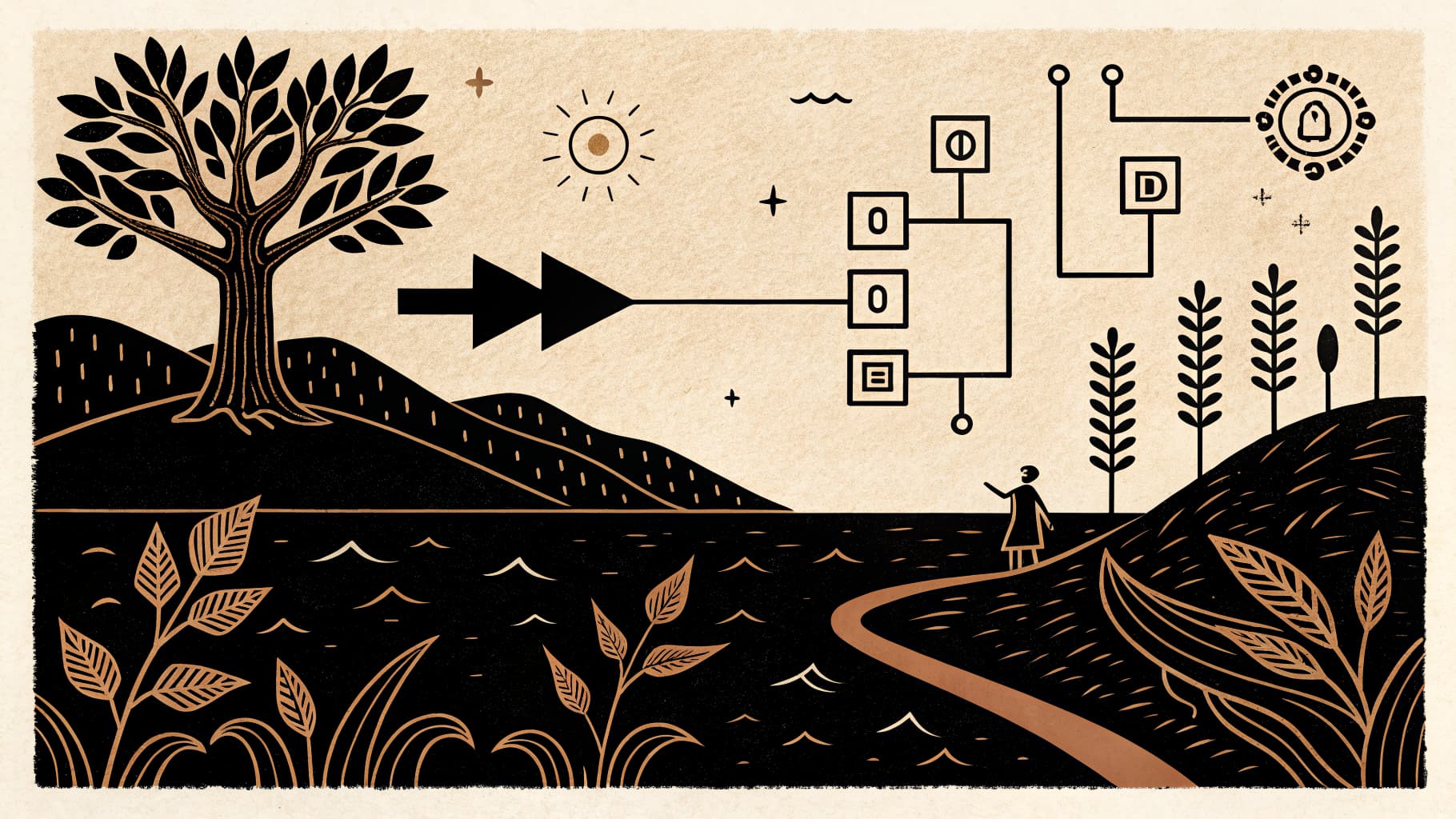
Pattern Recognition and Abstraction
Pupils identify similarities across different problems and learn to ignore irrelevant details to focus on what matters.
TL;DR:Pattern recognition and abstraction are sophisticated cognitive tools that allow 6th Year students to simplify the world around them. Pattern recognition involves spotting trends or shared characteristics between problems, while abstraction is the process of filtering out unnecessary details to focus on the core logic. These concepts align with the Shape and Space strand of the NCCA curriculum, where students identify properties of shapes and spatial relationships that remain constant regardless of size or orientation.
About This Topic
Pattern recognition and abstraction are sophisticated cognitive tools that allow 6th Year students to simplify the world around them. Pattern recognition involves spotting trends or shared characteristics between problems, while abstraction is the process of filtering out unnecessary details to focus on the core logic. These concepts align with the Shape and Space strand of the NCCA curriculum, where students identify properties of shapes and spatial relationships that remain constant regardless of size or orientation.
In an Irish context, these skills are essential for developing digital literacy as outlined in the Primary Curriculum Framework. By learning to ignore 'noise' and focus on essential data, students become more efficient problem solvers. This prepares them for more complex coding where they must create general solutions that work for many different inputs rather than just one specific case.
Students grasp this concept faster through structured discussion and peer explanation where they must justify why certain details are irrelevant.
Key Questions
- How do patterns help us solve problems faster?
- What details can we leave out when describing a complex system?
- How do computers use abstraction?
Watch Out for These Misconceptions
Common MisconceptionAbstraction means deleting important information.
What to Teach Instead
Students often fear they are losing data. Use a collaborative investigation to show that abstraction is about 'hiding' complexity to make a system usable, similar to how a car dashboard hides the engine's complexity.
Common MisconceptionPatterns only exist in numbers.
What to Teach Instead
Students may only look for patterns in maths class. Use a gallery walk of music, art, and nature to show that patterns are everywhere, helping them apply computational thinking across the whole curriculum.
Active Learning Ideas
See all activities→Gallery Walk
Spot the Pattern
Display various images (maps of Irish towns, Celtic knotwork, and weather charts). Students move in groups to identify repeating elements and record how recognizing these patterns helps us understand the whole image.
Simulation Game
The Map Maker
Students are tasked with drawing a map of the school for a visitor. They must decide which details to include (doors, stairs) and which to abstract away (carpet colour, individual desks) to make the map functional.
Think-Pair-Share
Emoji Stories
Students describe a famous Irish historical event or fairy tale using only five emojis. This forces them to use abstraction to identify the most critical parts of the story while ignoring minor details.
Frequently Asked Questions
Why is abstraction difficult for 11 and 12-year-olds?
How does pattern recognition help with coding?
What are the best hands-on strategies for teaching abstraction?
How does this link to the NCCA Digital Learning Framework?
More in Computational Thinking and Problem Solving
Decomposition and Algorithms
Pupils learn to break down complex problems into smaller, manageable parts and create step-by-step instructions to solve them.
8 methodologies
Logic and Flowcharts
Pupils use logical reasoning to predict outcomes and design flowcharts to visually represent algorithms.
8 methodologies