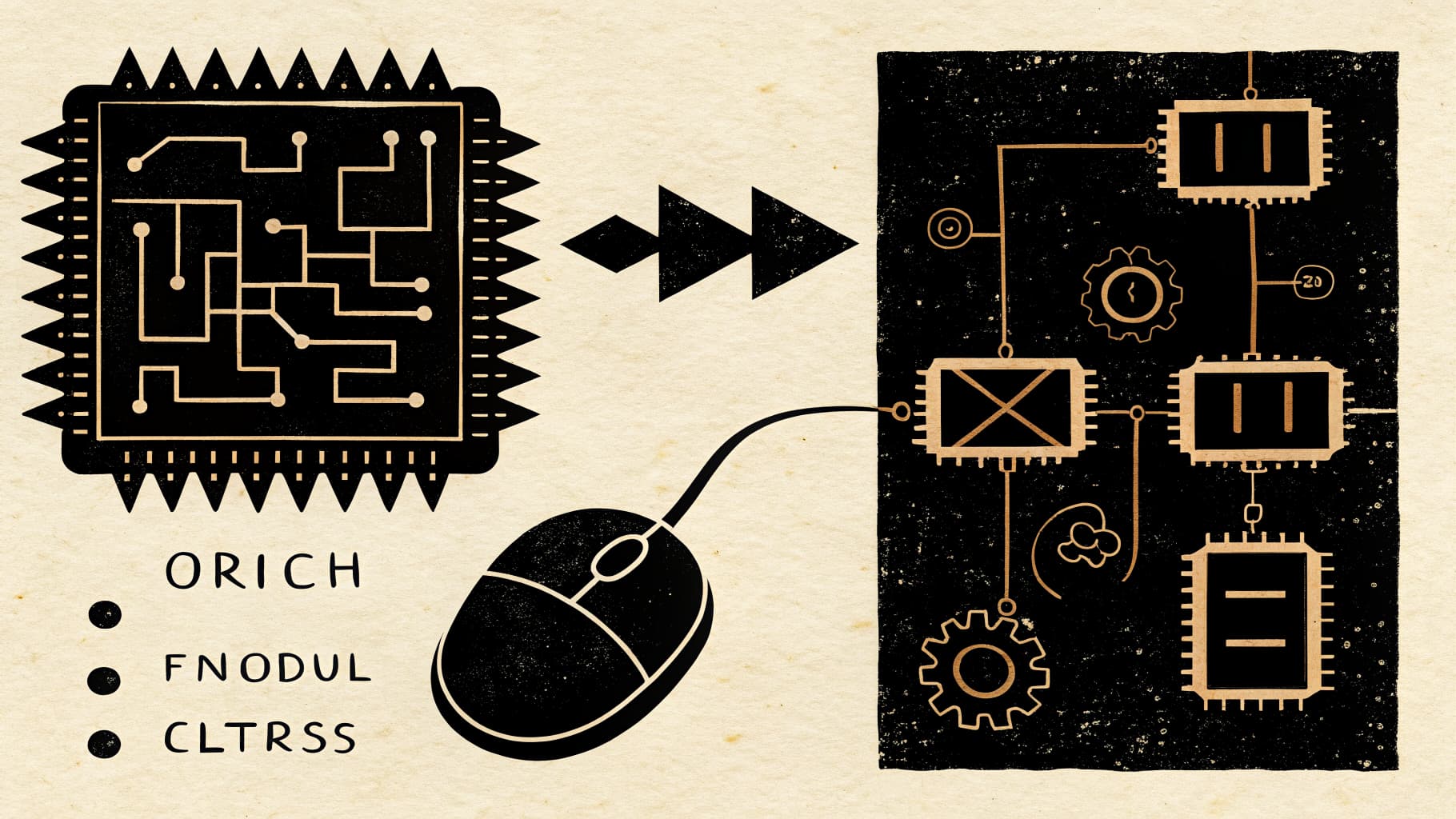
The Evolution of User Interfaces
Analyse how user interfaces have evolved from punch cards to touchscreens, reflecting changes in human-computer interaction and society.
TL;DR:The way we interact with computers has changed radically, from feeding punch cards into a machine to swiping on a glass screen. This topic traces the evolution of User Interfaces (UI) and the social factors that drove these changes. Students examine the transition from text-based interfaces to the Graphical User Interface (GUI) popularized by the Apple Macintosh and Windows.
About This Topic
The way we interact with computers has changed radically, from feeding punch cards into a machine to swiping on a glass screen. This topic traces the evolution of User Interfaces (UI) and the social factors that drove these changes. Students examine the transition from text-based interfaces to the Graphical User Interface (GUI) popularized by the Apple Macintosh and Windows.
This unit is a key part of the NCCA 'Application Design' strand. It helps students understand that a good interface is about more than just looking nice; it's about human psychology and making technology intuitive. This topic comes alive when students can physically model the patterns of a user's journey through an app using paper prototyping.
Key Questions
- How did early programmers interact with computers?
- What social factors drove the development of graphical user interfaces (GUIs)?
- How do modern interfaces shape our daily lives and behaviours?
Watch Out for These Misconceptions
Common MisconceptionThe 'best' UI is the one with the most features.
What to Teach Instead
Students often try to clutter their designs. Use a peer-review session to show that 'less is more' and that a clean, simple interface is often much more effective for the user.
Common MisconceptionUser Interface (UI) and User Experience (UX) are the same.
What to Teach Instead
This is a common mix-up. Explain that UI is the 'look' (the buttons and colors), while UX is the 'feel' (how easy it is to achieve a goal). Hands-on prototyping helps clarify this.
Active Learning Ideas
See all activities→Think-Pair-Share
The Best and Worst UIs
Students identify one app they find easy to use and one they find confusing. They pair up to list the specific UI elements (buttons, menus, colors) that cause these feelings.
Simulation Game
Paper Prototyping
Students 'code' an app using only paper and sticky notes. One student acts as the 'computer' and another as the 'user,' moving the paper elements in response to 'clicks.'
Gallery Walk
UI Through the Decades
Stations show screenshots of Windows 1.0, early AOL, and modern iOS. Students rotate and note how the use of icons, windows, and 'skeuomorphism' has evolved.
Frequently Asked Questions
What social factors drove the development of GUIs?
How do modern interfaces shape our daily behaviours?
What is a 'Command Line Interface' (CLI)?
How can active learning help students understand UI design?
More in Software Engineering and Community Impact
Open Source and Collaborative Movements
Trace the history of the open-source movement and its impact on collaborative problem-solving and democratic software development.
8 methodologies
Designing for Accessibility and Inclusion
Investigate the historical progression of accessibility in technology and how software engineering can promote social inclusion for marginalised groups.
8 methodologies